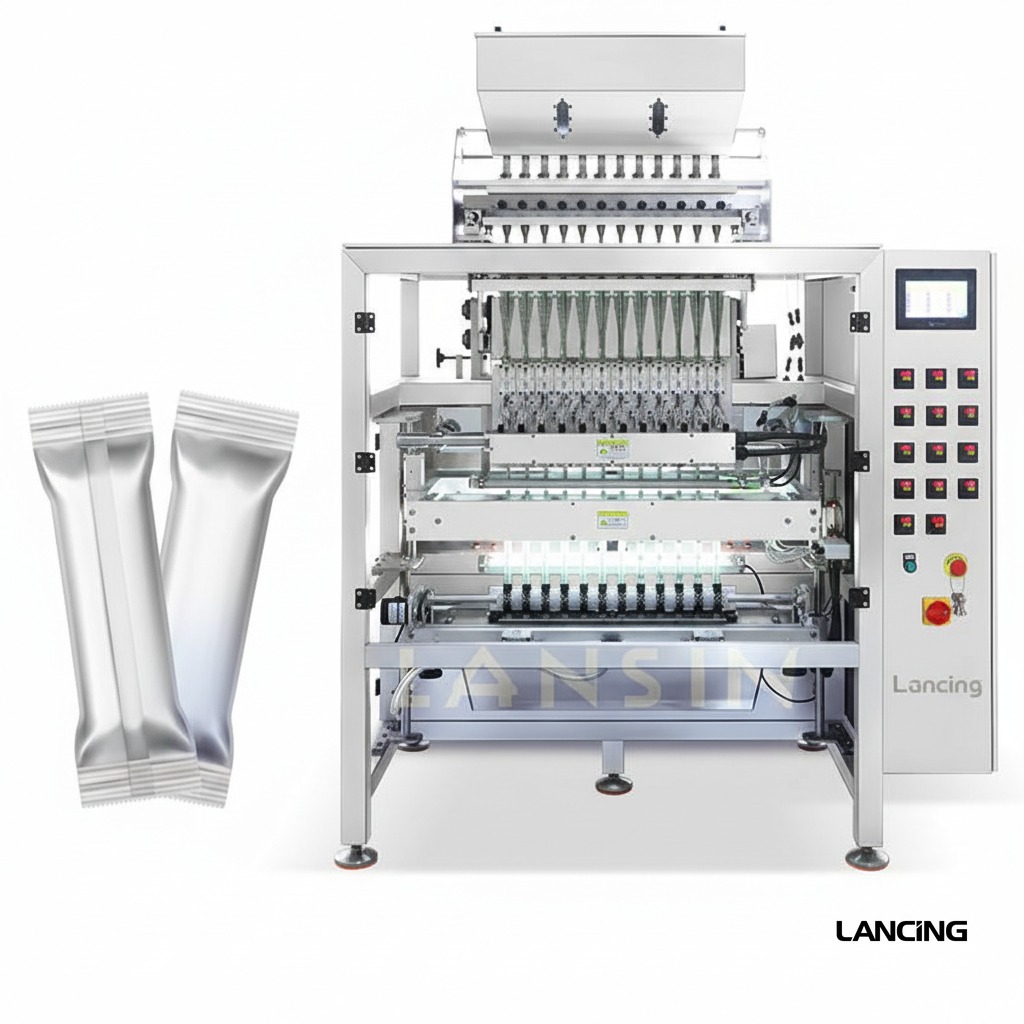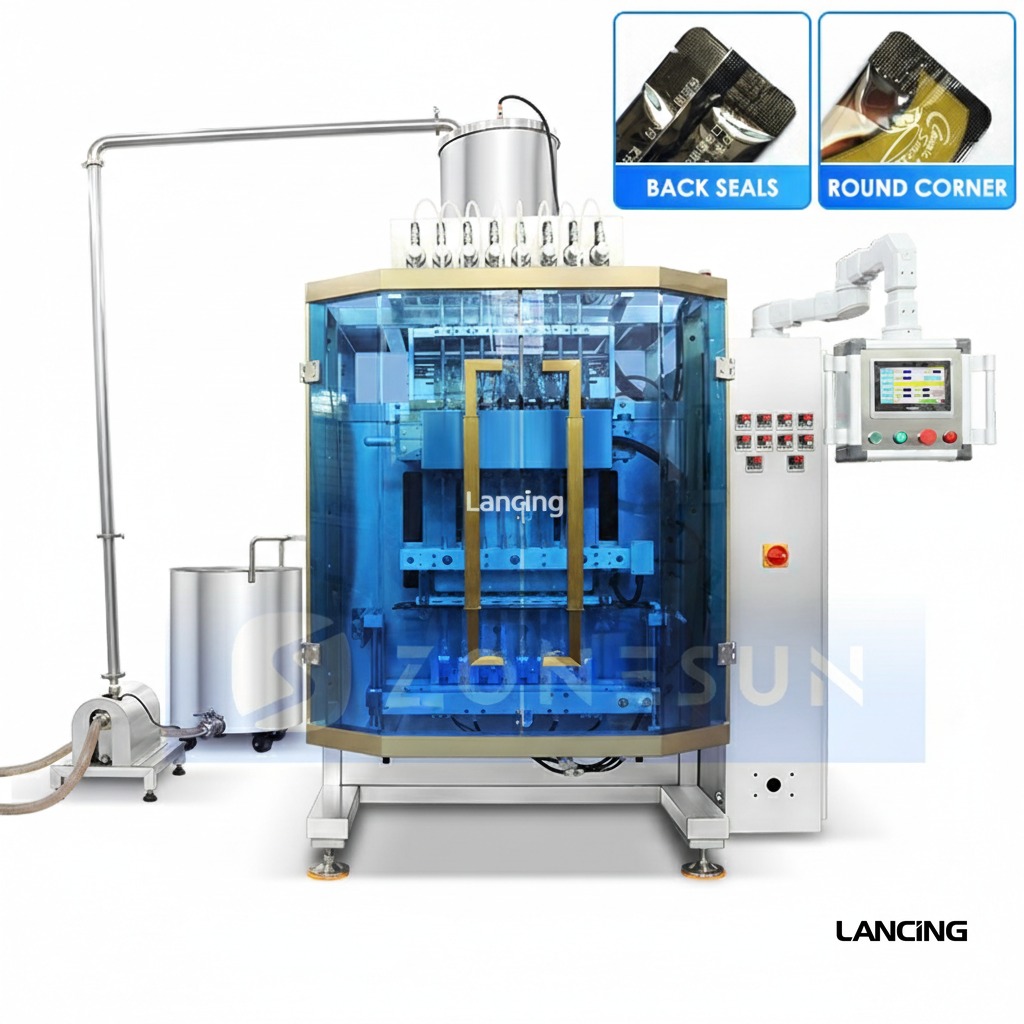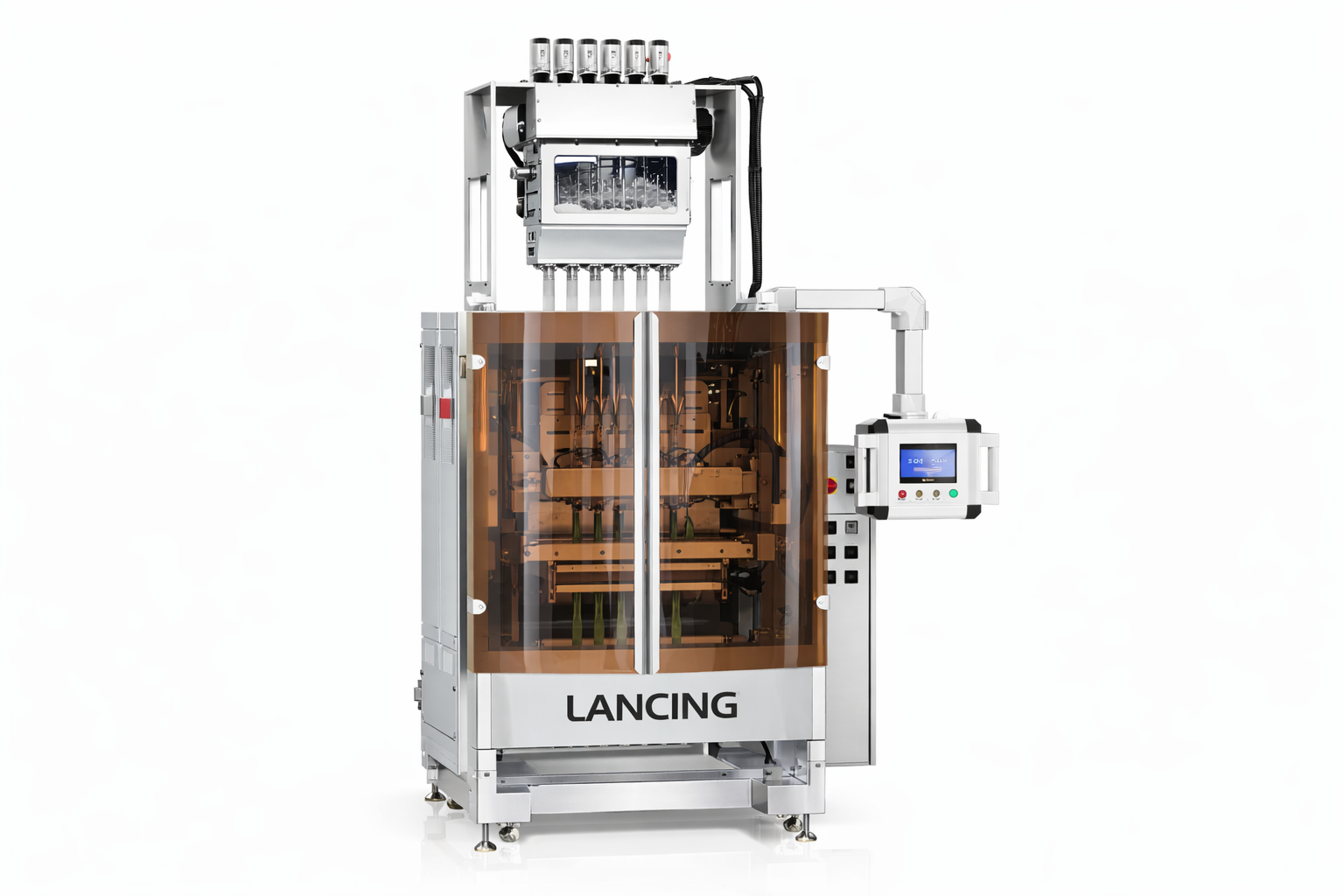
Multi-lane sachet packing

Multi-lane sachet packing machines for higher output portion packs

Compare multi-lane VFFS machinery for small sachets and stick packs where a single-lane machine cannot meet the target output.

Specification focus

Keep the machine choice tied to the product and pack.

Multi-lane machines multiply output, but every lane still needs stable dosing, film tracking, sealing and cutting.

Why use multi-lane sachet machinery

Multi-lane systems run several packs across the film web, making them useful for high-volume sachets and portion packs.

Powder, granule and liquid options

Different products need different dosing equipment across the lanes, including augers, cup/weighing systems or pumps.

Specification checks

Confirm sachet width, length, film roll size, lane count, dose accuracy, coding and downstream handling before choosing a multi-lane layout.

Buyer questions

Multi-lane sachet packing FAQs

When is multi-lane better than single-lane?

Multi-lane is considered when the target output is too high for a single-lane machine at the required pack size.

Can multi-lane machines pack powders?

Yes, with suitable multi-lane auger dosing and dust-control consideration.

Can liquid sachets be multi-lane?

Yes, multi-channel liquid sachet systems can use pump filling for suitable products.

Need a quote?

Send product, pack size, film and output target.

Contact Lancing

Keep lane identity through inspection and collection

A multi-lane test is more informative when samples remain traceable to their lane. Define how packs from each position across the web will be identified and collected for checking. Record the agreed quantity and seal observations per lane before combining them into an overall output result.

Review what happens after cutting. Packs may need counting, grouping or presentation to another process, and those tasks should be included in the integration brief. A combined machine rate does not establish that the intended downstream packing method can receive every lane continuously.

Fault isolation
Ask how a lane-specific dosing or coding issue is detected and how affected sachets are kept out of accepted output.
Format changes
Record which film width, forming parts and coding arrangement apply to each released format. Confirm whether a proposed lane-count change is actually supported.

Can an average across all lanes hide a problem?

Yes, so retain lane-specific results and the test conditions. Use the agreed acceptance criteria for each lane as well as the combined production result.

Call now