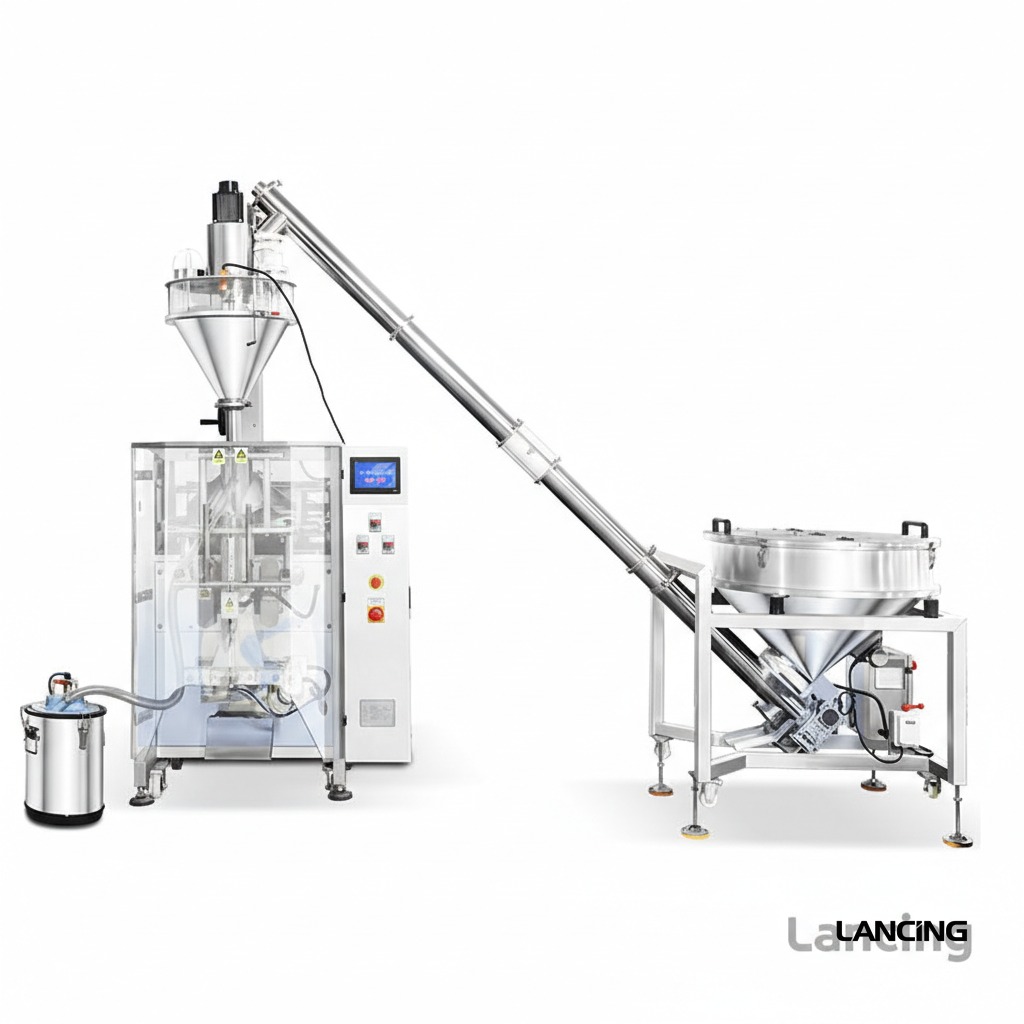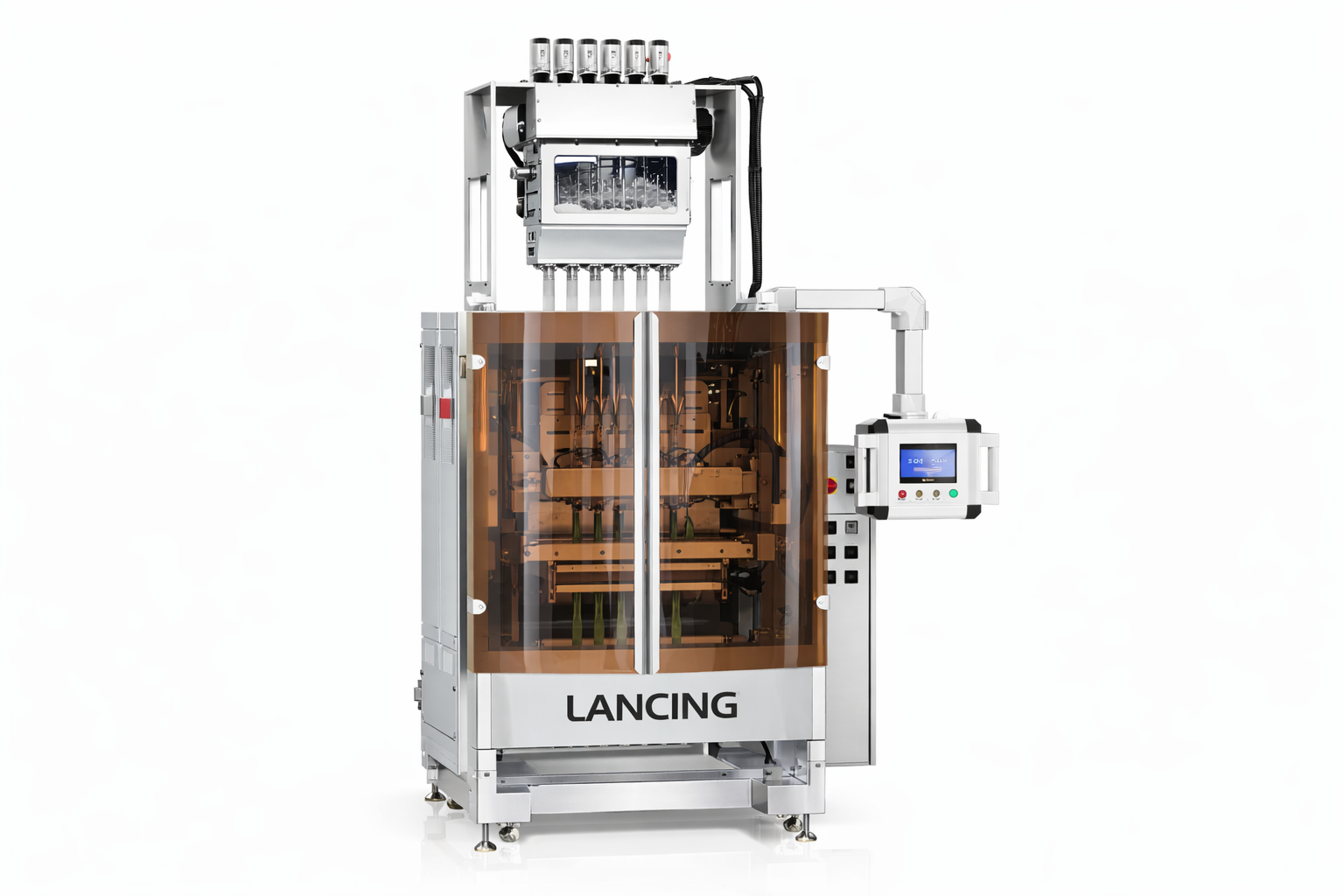
Powder VFFS machinery

Powder form fill seal machines with auger dosing

Use this guide to compare powder form fill seal, powder VFFS and auger filling machines before sending product samples, pack drawings and output targets to Lancing for a practical machine shortlist.

SEO focus

Built for real production requirements, not only catalogue names.

Lancing helps UK manufacturers compare packaging machinery by product behaviour, dosing technology, film and seal requirements, target bags per minute, available utilities and line layout. The aim is to specify the correct form fill and seal machinery route before a formal proposal is prepared.

Powder bagging needs controlled dosing

Powder form fill seal machinery is usually specified with auger filling because the screw can meter powders into sachets, stick packs and larger bags with controlled repeatability. The auger, hopper and agitator must be matched to the powder flow, bulk density and required filling tolerance.

Key risks on powder VFFS lines

Fine powder can bridge, aerate, dust, cling to film or contaminate the seal area. Good specification covers hopper design, screw selection, filling height, dust extraction, anti-static measures, film choice and seal dwell time before the machine is selected.

When to consider multi-lane powder packing

Multi-lane powder VFFS can increase output where small sachets or stick packs are required in volume. Each lane needs consistent dosing and film handling, so product testing and pack drawings are important before committing to a layout.

Questions buyers search for

Powder form fill seal machines FAQs

Which filling system is normally used for powders?

Auger filling is commonly used because it meters powder by screw rotation and can be adjusted for different fill weights.

Can one powder machine pack different bag sizes?

It may be possible if the format range is planned at quotation stage, but forming sets, film width, sealing jaws and programming must suit the required sizes.

What powder samples are useful?

Provide enough product for flow testing, target fill weight, bulk density information and details of dust, clumping or moisture sensitivity.

Ready to compare options?

Send product, pack size, film and output target.

Contact Lancing

Powder VFFS engineering

Control powder before it reaches the forming tube

Use bulk density and flow behaviour to interpret the dose

Auger filling meters a volume created by screw rotation, so a change in bulk density changes the mass delivered by the same nominal movement. Record normal density variation, aeration, fines and any tendency to bridge or compact. A representative trial can then establish the screw, agitation and refill arrangement.

Keep powder away from critical seals

Dust and product fall can contaminate the horizontal seal area. The solution may involve timing, extraction, product settling, anti-static measures, fill-tube design or a different bag length. Raising seal temperature alone does not remove contamination and can damage the film.

Plan cleaning and product changeover

Identify every product-contact component, how the auger and hopper are accessed and whether dry clean, vacuum clean or a more extensive procedure is required. Allergen or cross-contamination controls should be defined by the user’s process and verified against the intended product range.

Use the specialist owner for standalone powder dosing

This page owns powder packing where dosing is integrated with vertical bag forming. For broader powder filler selection use powderfillers.co.uk; for detailed auger technology use augerfillers.co.uk.

Buyer questions

Further powder form fill seal questions

Why is a volumetric filling range not the same as a weight range?

The mass depends on product bulk density. Convert the target weight using representative density data, then confirm dose repeatability with the real powder.

What causes powder to bridge in a hopper?

Cohesion, moisture, compaction, wall angle and refill method can all contribute. Hopper agitation and geometry should be assessed with the product.

How can powder on the seal be investigated?

Record when contamination occurs, inspect product fall and air movement, check timing and static, and compare the affected packs with clean-film seal samples.

What should a powder trial record?

Record product batch, bulk density, screw and agitation arrangement, refill method, target dose, run speed, film, seal checks and the cleaning condition before and after the run.

Application review

Send a representative powder sample, target dose and production-intent film.

Contact Lancing

Powder process questions

Questions about powder feed, aeration and seal contamination

Why can an auger give different weights after hopper refill?

A refill can change powder head, compaction and aeration around the screw. If the incoming product has a different bulk density or the refill action fluidises the powder, the same auger rotation can deliver a different mass. The trial should include the normal refill method and record dose behaviour before, during and after replenishment.

How does powder dust reach the horizontal seal area?

Dust can be carried by the falling dose, displaced air, product bounce or a poorly timed cutoff. It may also remain on the film from earlier cycles. Feed control, enclosed transfer, extraction, nozzle position, dose timing and enough clearance before jaw closure all help, but the correct approach depends on the powder and the permitted product loss.

When is agitation helpful and when can it over-aerate powder?

Agitation is useful when powder bridges, rat-holes or does not refill the auger consistently. Excessive or poorly chosen agitation can entrain air, change bulk density, increase dust and disturb dose repeatability. The setting should be judged from stable refill and weight data rather than simply increasing movement until the hopper appears active.

What should be checked when a powder recipe is transferred between batches?

Confirm the new batch bulk density, moisture, temperature, flow, fines content and storage history before accepting the previous recipe. Check hopper refill, auger response, dose trend and powder on the seal. If the product specification allows meaningful variation, define which adjustment the operator may make and when a new trial or approval is required.

Powder dosing decision

Select the powder filler from the worst credible product condition

A powder that performs well immediately after mixing may dose differently after storage, transport, settling or aeration. The trial should include the conditions expected in production rather than one convenient sample.

Powder conditionWhat to assessEvidence needed before approval
Fine or cohesive powderAuger tooling, hopper agitation, bridging, dust path and product cut-off.Bulk-density range, flow observations, target weight, consecutive weights and seal-area inspection.
Free-flowing granular powderWhether auger, cup or weight-based dosing gives the required control without unnecessary complexity.Density stability, particle distribution, tolerance, fill range and refill behaviour.
Aerated product after transferSettling time, feeder design, hopper level and change in mass per auger revolution or cup volume.Samples taken before and after transfer, density record and results through normal hopper refill.
Dusty or seal-contaminating powderProduct fall, extraction, nozzle length, bag opening time and horizontal-jaw cleanliness.Film and product from a timed run, labelled failed seals and the agreed cleaning/intervention method.

Buyer questions

Questions about powder dosing on a VFFS line

Is an auger filler always required for powder?

No. Augers are widely assessed for fine, cohesive and controlled-flow powders, but some stable free-flowing products may suit volumetric or weight-based dosing. The decision should follow density variation, flow, dust, fill range, tolerance, clean-down and the way product reaches the bag.

Why does powder bulk density affect fill weight?

Many powder fillers control a volume or screw movement, while the commercial requirement is normally a mass. If the same volume contains a different mass after aeration, settling or formulation change, the resulting pack weight changes unless the process detects and corrects that variation.

How can powder be kept out of the seal area?

Control the product fall, bag-open time, nozzle position, extraction, dust release and jaw timing together. A trial should inspect the horizontal seal throughout stable running, refill and restart, because a clean demonstration pack does not prove that contamination remains controlled during normal events.

What powder samples should be sent for a trial?

Send representative normal product and, where available, the worst credible condition for density, moisture, aeration or flow. Include target fill, tolerance, pack drawing, production-intent film and information about upstream transfer, storage and cleaning so the trial reproduces the real process.

Call now