VFFS machinery UK

Vertical form fill seal machines for UK production lines

Use this guide to compare form fill seal machines, VFFS machinery and vertical bagging equipment before sending product samples, pack drawings and output targets to Lancing for a practical machine shortlist.

SEO focus

Built for real production requirements, not only catalogue names.

Lancing helps UK manufacturers compare packaging machinery by product behaviour, dosing technology, film and seal requirements, target bags per minute, available utilities and line layout. The aim is to specify the correct form fill and seal machinery route before a formal proposal is prepared.

What a vertical form fill seal machine does

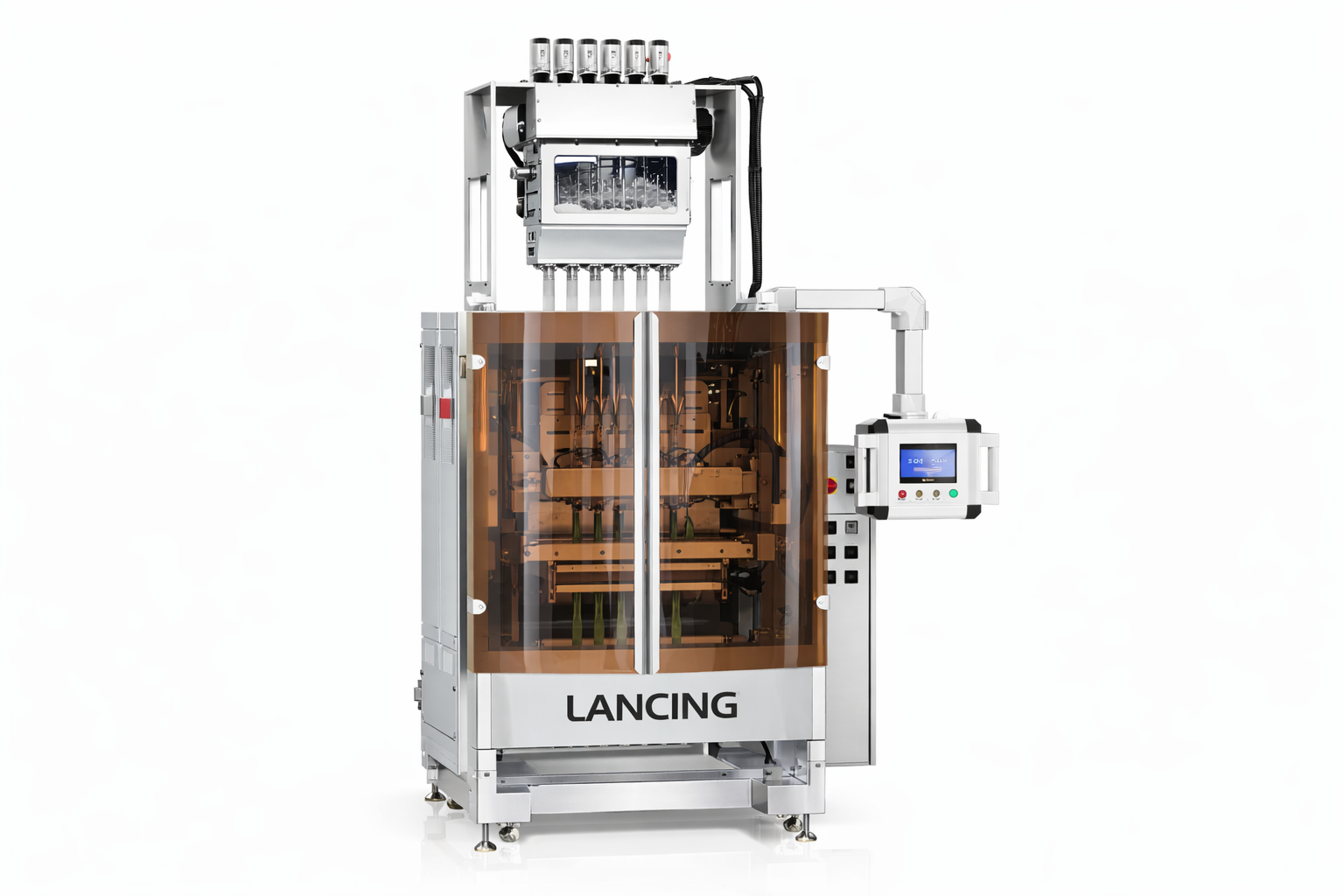
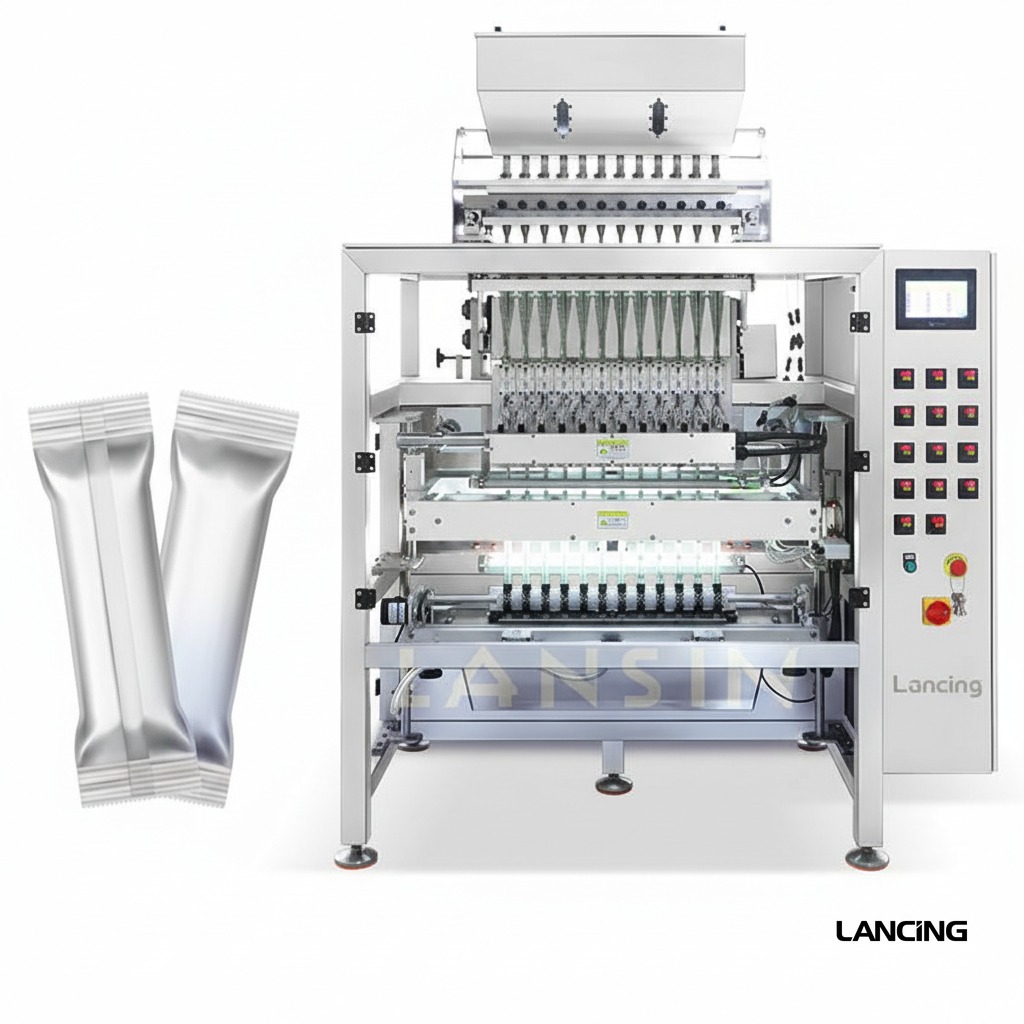
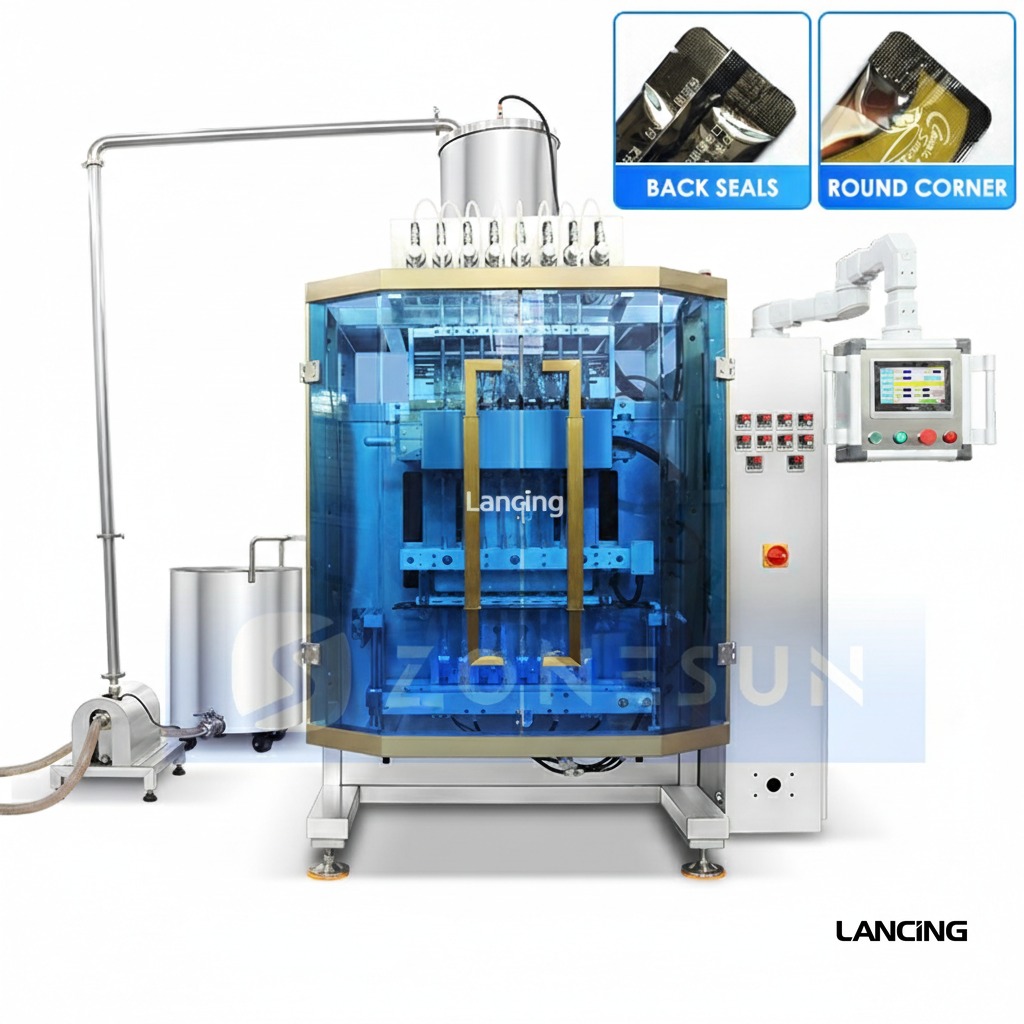
A vertical form fill seal machine takes a reel of flexible packaging film, forms it around a forming set, fills the product vertically into the pack and seals the finished bag. This makes VFFS machinery a practical route for high-volume sachets, stick packs, pillow bags, back seal pouches and many small bag formats.

Where VFFS works best

VFFS is normally strongest when the product can be dosed consistently into a forming tube or multi-lane system. Powder applications often use auger filling, granules often use weighing or volumetric dosing, and liquids or pastes use pump filling with seal control matched to the film and product temperature.

Specification points to confirm

Before choosing a VFFS machine, confirm product flow, fill weight or volume, pack width and length, film structure, seal type, target bags per minute, available voltage and air, printing or coding needs, conveyors, inspection and operator access around the line.

Questions buyers search for

Vertical form fill seal machines FAQs

What does VFFS stand for?

VFFS means vertical form fill seal. The machine forms a bag from film, fills it vertically and seals the pack in one automated process.

Is VFFS suitable for powders and granules?

Yes. Powders usually require auger filling and dust control, while granules may use weighing, cup or volumetric dosing depending on the product and fill accuracy required.

What should I send for a VFFS quote?

Send product details, sample weight, bag size, film specification, target speed, site utilities and any coding, checkweighing or downstream conveyor requirements.

Ready to compare options?

Send product, pack size, film and output target.

Contact Lancing

VFFS selection depth

Specify the vertical forming process, not only the bag width

Match the forming set to the film and finished pack

The forming shoulder and tube establish the film path and finished tube geometry. Confirm the production-intent film width, thickness, stiffness, seal style and intended bag dimensions. A physically compatible film width does not by itself prove stable tracking or acceptable seals.

Synchronise dosing with jaw timing

Powder, granule and liquid products reach the horizontal seal zone differently. Product fall time, settling, drip or stringing must be controlled so the jaws close on clean film. The required accepted output should therefore be tested with the actual dosing system, not calculated from an empty machine cycle.

Test registration and coding on formed packs

For printed film, assess mark detection, bag length and cut position throughout a stable run and after a stop. Check the code on the finished pack because web movement, forming and seal heat can change presentation compared with a flat-film print test.

Differentiate vertical and horizontal wrapping

A vertical form fill seal machine forms a tube around product that generally moves downward through the system. Where a discrete product travels horizontally through a wrapper, the specialist information belongs on flowwrappingmachines.co.uk.

Buyer questions

Further vertical form fill seal questions

What should be supplied with a film sample?

Provide the film construction, thickness, roll width, printed repeat, mark position, winding direction and the intended finished bag dimensions.

Why is product fall time important?

The dose must clear the horizontal seal zone before jaw closure. Slow-falling, bouncing, dusty or stringing products can require changes to timing, bag length or product control.

Can a forming set cover every bag size?

A machine may cover a range, but forming parts and practical film geometry can limit individual formats. Confirm each required size and changeover arrangement.

How should output be stated?

Use accepted packs per minute under defined product, film, dose and inspection conditions rather than an unloaded cycle figure.

Application review

Confirm product, film web, forming set and accepted output as one system.

Contact Lancing

Machine architecture

Motion, forming and sealing choices that change the VFFS shortlist

Confirm how the film moves during the sealing cycle

Intermittent and continuous-motion arrangements create different timing windows for product fall, film pull and jaw contact. The suitable route depends on bag length, product behaviour, seal requirement and accepted output. The motion type should be confirmed from the proposed machine configuration rather than inferred from a general VFFS description.

Specify the forming shoulder as change tooling

The forming shoulder and tube define the path from flat web to finished bag. A new bag width, gusset, seal geometry or substantially different film can require a different forming set even when the machine frame is unchanged. List the complete pack range at quotation stage so change parts, storage, lifting and repeatable set-up can be considered as part of the project.

Separate vertical- and horizontal-seal requirements

The longitudinal seal closes the film tube, while the horizontal jaws close the top and bottom of each pack and normally create the cut between packs. These locations can have different film overlap, contamination and cooling conditions. Trial records should identify which seal was inspected and use the agreed method after the pack has cooled and passed through normal discharge handling.

Include registration and coding in the finished-pack check

Printed film introduces a relationship between repeat length, photocell mark, bag length, cut position and code area. A sensor response alone is not sufficient evidence. Inspect the completed pack after start-up, a stable run, a planned stop and a roll change, and use the photocell registration guide when artwork position is a controlling requirement.

Selection evidence

Record each VFFS decision against the finished pack

DecisionEngineering effectEvidence to provide
Motion and jaw cycleChanges the time available for film movement, product clearance and sealing.Target accepted output, bag length, product fall behaviour and required seal method.
Forming setControls web path, tube geometry and the practical finished bag width.Bag drawings, film width and construction, gusset or seal style and the full size range.
Dosing interfaceControls drop timing, headspace and contamination risk at the horizontal seal.Representative product, dose range, tolerance and feed-system arrangement.
Printed-film controlLinks repeat length, bag length, artwork, cut position and coding.Production-intent reel, artwork repeat, mark specification and accepted print-to-cut reference.

Architecture questions

Questions to resolve before the forming set is ordered

Can one forming shoulder cover every bag width?

Not necessarily. The forming set is selected around a defined film and bag geometry. A materially different width, gusset or seal arrangement may require separate change tooling.

Why must vertical and horizontal seals be checked separately?

They use different sealing locations and can experience different overlap, pressure, cooling and product-contamination conditions, so one acceptable seam does not prove the other.

When should a horizontal wrapper be compared instead?

Where a stable discrete product must travel through the pack horizontally, compare the specialist route at Flow Wrapping Machines UK rather than treating it as a vertical bagging project.

System selection

Define the motion, control and downstream architecture

A VFFS machine is only one timed element of the production line. Dose completion, product clearance, horizontal-seal motion, printed-film registration, inspection and discharge must share a workable cycle and failure response.

Motion and pack formation

  • Intermittent or travelling-jaw cycle
  • Bag length and film repeat
  • Seal dwell and cooling
  • Start, stop and restart evidence
Compare motion systems

Safety and compliance

  • Intended use and destination market
  • Complete-line risk assessment
  • Guarding, isolation and intervention tasks
  • Training and change control
Open the UK checklist

Data and inspection

  • Accepted and rejected pack counts
  • Code and registration checks
  • Downtime states and reason codes
  • Controlled remote diagnostics
Plan production data

Vertical process questions

Questions about vertical product fall, jaw timing and bag formation

Why does vertical product fall influence bag quality?

Product must travel through the dosing outlet and forming tube without striking sensitive parts, hanging up or entering the horizontal seal. Fall height, particle shape, static, dust and fragility influence breakage and settling. The bag must also support the dose without stretching, folding or pulling the still-warm end seal out of shape.

How does jaw motion affect the available seal time?

Intermittent jaws normally seal while the film is stopped; continuous-motion jaws travel with the film during the sealing part of the cycle. The useful seal time still depends on film, temperature, pressure, jaw condition and pack geometry. Motion type should be compared using accepted packs and the required process window, not motion description alone.

What determines whether the bag can settle before cutting?

Bag length, fill volume, product fall time, trapped air, film stiffness, jaw timing and any bag-support device affect settling. Heavier or bulky packs may need controlled support or discharge so the freshly made seal is not loaded abruptly. The trial should observe pack shape at the jaw, immediately after cutting and on the takeaway conveyor.

Which parts of a VFFS line set the true maximum pack length?

The machine frame and film-pull stroke matter, but so do print repeat, registration control, forming-tube length, product fall, jaw opening, discharge clearance and downstream handling. A long bag that can be physically formed may still be impractical if the dose cannot clear, the pack cannot settle or the conveyor cannot receive it without contact.

Connected specification

Specify the filler, bag format and site services as one VFFS system

The filler must discharge inside the available machine cycle

The VFFS frame cannot compensate for a filler that doses too slowly, varies with hopper level or leaves product falling while the horizontal jaws close. Compare the product-clear time as well as the dose time, and confirm how the filler exchanges ready, discharge, complete and fault signals with the bagger. Use the VFFS dosing systems guide to compare auger, weigh, cup and pump routes.

The bag format changes forming and sealing hardware

A pillow bag, gusseted bag, block-bottom pack or sachet can require a different forming set, film width, seal geometry, product settling arrangement and change parts. The artwork repeat and registration mark must be designed around the finished bag and seal allowances. See the VFFS bag styles and pack formats guide before fixing reel dimensions.

The installed system needs confirmed utilities and access

The final configuration may include a feeder, platform, coder, inspection equipment, reject handling and discharge conveyors in addition to the VFFS machine. Power, compressed air, extraction, product-feed height, floor loading and maintenance space should therefore be checked for the complete line. Use the VFFS utilities and installation guide during layout approval.

Call now