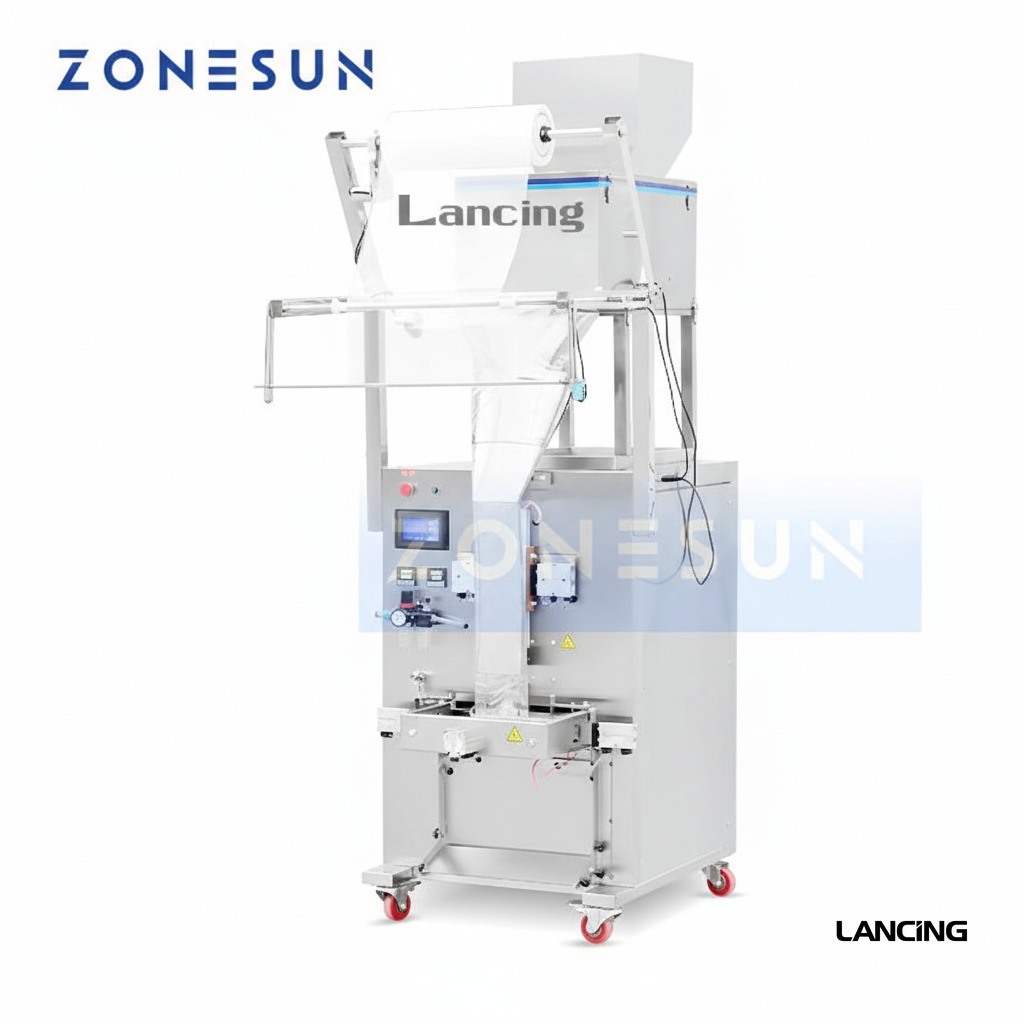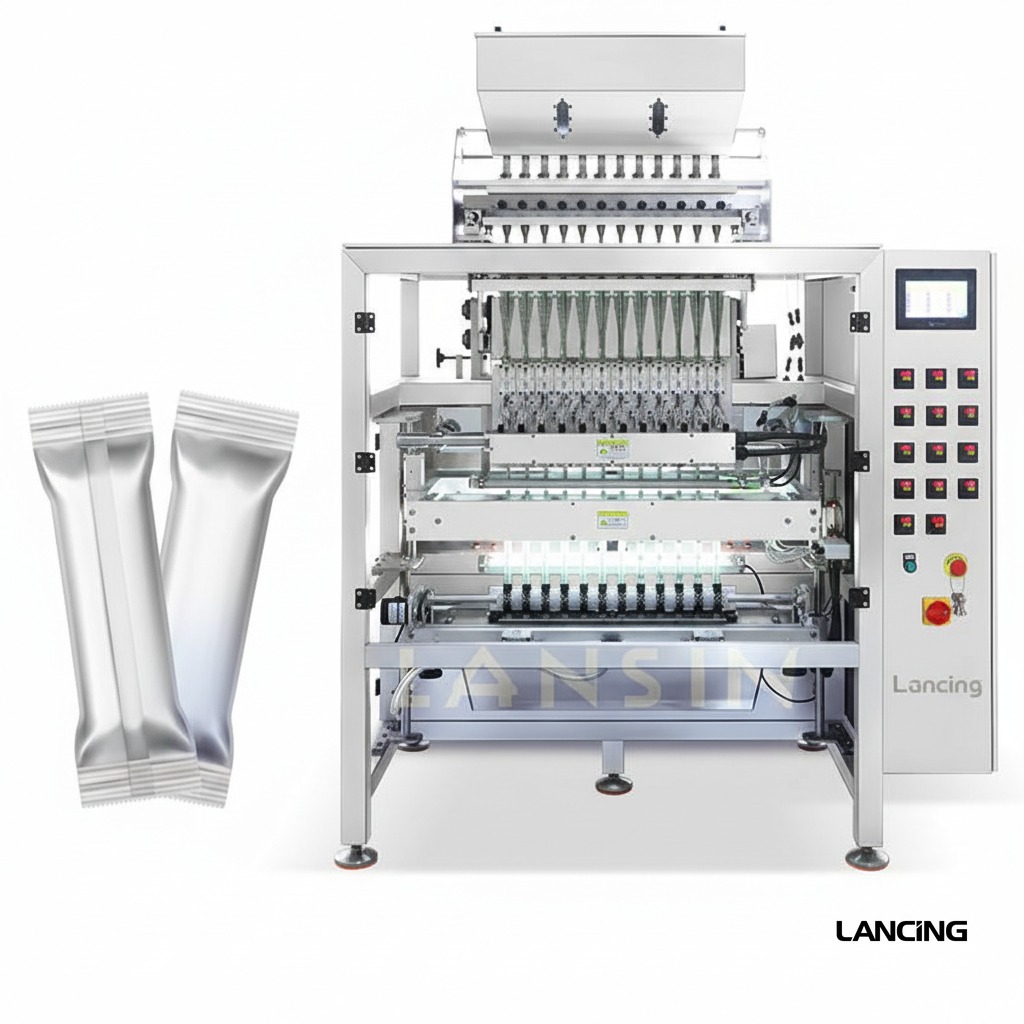
Multi-lane granule VFFS

Automatic VFFS 12 Lanes Granule Filling Sealing Machine

A 12-lane vertical form fill seal system for granular products where many small packs need to be formed, filled, sealed and cut at speed.

Automatic VFFS 12 Lanes Granule Filling Sealing Machine

Machine overview

A 12-lane vertical form fill seal system for granular products where many small packs need to be formed, filled, sealed and cut at speed.

This route is specified around your product behaviour, film material, required pack dimensions, expected output, available utilities and downstream handling. Final specification is confirmed against the live application.

Typical applications

  • Sugar sachets
  • Granules
  • Small portion packs
  • High volume sachet packing

Specification guide

ModelLU-FSL12
MaterialGranule
FilmComposite film
Film size600mm, 50mm/lane
Lanes12
Sealing patternBack sealing
Bag length40–80mm ±1mm
Air pressure0.8MPa

Project notes

Confirm product samples, bag drawings, filling range, dosing tolerance, seal pattern, film roll details and any print, inspection or reject requirements before ordering.

Multi-lane granule VFFS notes

This machine route targets many small granule packs at speed. Confirm particle size, dose, lane count, sachet dimensions, film width and product drop timing so the system can hold seal quality at output.

For a wider comparison, see the related specification guide or send a product sample, bag size and target output to Lancing.
Twelve-lane granule specification

Application engineering for the LU-FSL12 multi-lane granule VFFS machine

Best-fit application

The LU-FSL12 is intended for granular products in multiple small back-seal packs. The published layout uses 12 lanes across 600mm film at 50mm per lane, so artwork, lane pitch, slitting and cut position must be designed as one production format.

Product distribution across twelve lanes

A stable common feed must divide product evenly without starving or overfeeding individual lanes. Particle-size range, static, product bounce and hopper level can change distribution. The acceptance sample should identify every lane and compare dose as well as pack presentation.

Bag length and registration

The page lists a 40–80mm bag length with a published ±1mm value. Treat that figure as a supplied specification to be confirmed with the selected film, registration method and operating speed. Printed repeat and cut position should be inspected at the start, during stable running and after stops.

Sealing and cut control

Back seals and horizontal seals must remain aligned across the full web. Check lane-to-lane temperature and pressure effects, product in the seal area, knife condition and separation of finished sachets. A defect on one lane should be traceable without masking the other results.

Utilities, access and changeover

The published air pressure is 0.8MPa. Confirm site pressure and flow under load, film-roll handling, access to dosing channels, cleaning method and safe access to slitting and cutting components. Format changes should include the lane layout and artwork requirements.

When another route is more appropriate

For larger weighed granule bags, compare the LU-FSK1000 weigh bagger. If multihead combination weighing is the core process, use the specialist selector at combiweigh.co.uk.

Buyer questions

LU-FSL12 multi-lane granule VFFS machine FAQs

Does every lane run at exactly the same dose?

The system should be assessed lane by lane. Product distribution and individual channel condition can create differences that a combined average would hide.

What film artwork information is needed?

Provide the 12-lane layout, lane pitch, repeat length, mark position, winding direction, cut lines and finished sachet tolerance.

How is the published bag-length tolerance used?

It is a supplied specification that should be confirmed under the agreed film, registration, speed and test conditions.

What granule properties affect the machine?

Particle size, density, shape, static, breakage sensitivity and flow consistency can affect distribution, dose and seal clearance.

How should a blocked or slow lane be handled?

The controls and operating procedure should identify the lane, contain affected packs and support safe correction without losing batch traceability.

What should be sampled after a restart?

Take identified packs from each active lane and check dose, registration, seals and cut before normal collection resumes.

Application review

Confirm the published specification with your product and film.

Contact Lancing

Validate each lane, the inspection rule and the reject path

Multi-lane output can conceal lane-to-lane variation. Sample by lane during start-up, stable running, replenishment and restart; record dose, registration, seal and cut position separately. If vision inspection is proposed, confirm how every lane is presented and how a failed sachet is associated with the correct reject action. Production data should distinguish machine cycles from the number of accepted sachets.

Call now