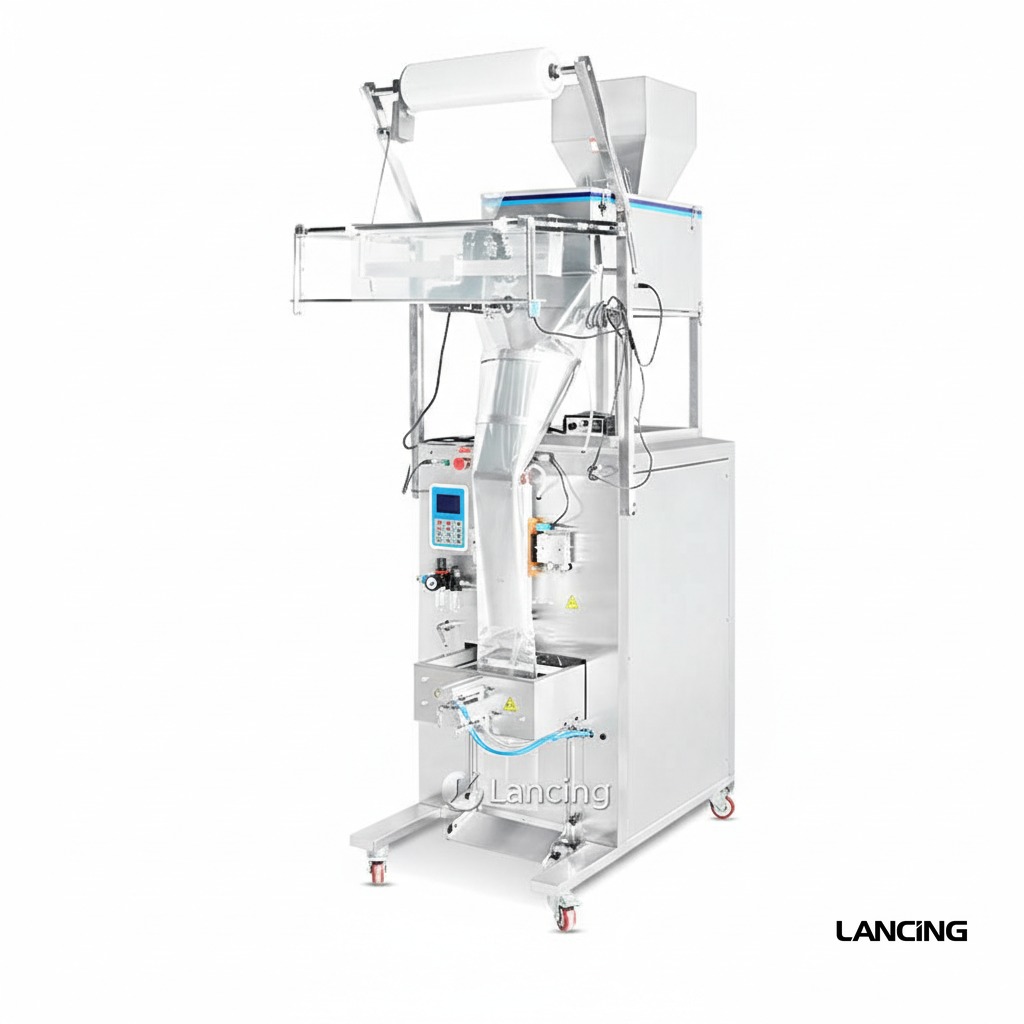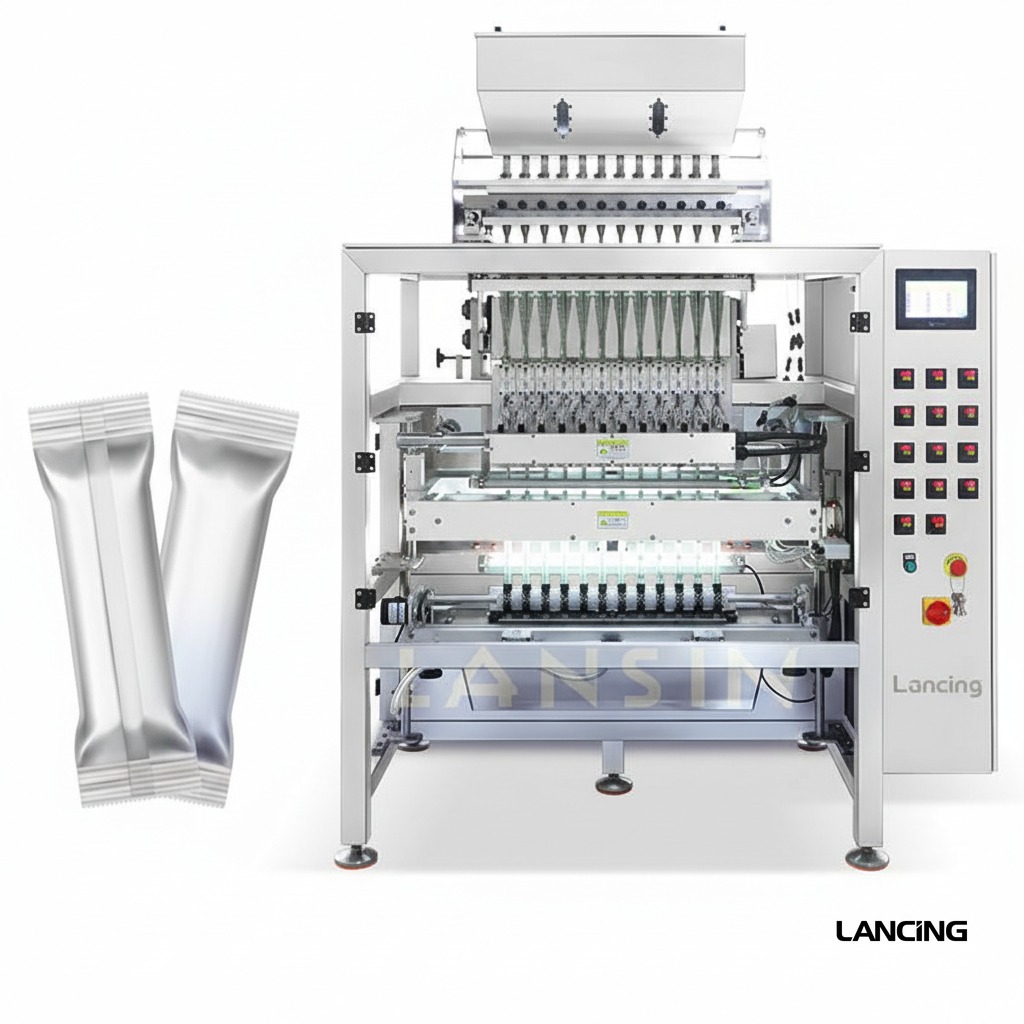
Granule VFFS machinery

Granule form fill seal machines for weighed bags and pouches

Use this guide to compare granule VFFS, weighing baggers and form fill seal pouches before sending product samples, pack drawings and output targets to Lancing for a practical machine shortlist.

SEO focus

Built for real production requirements, not only catalogue names.

Lancing helps UK manufacturers compare packaging machinery by product behaviour, dosing technology, film and seal requirements, target bags per minute, available utilities and line layout. The aim is to specify the correct form fill and seal machinery route before a formal proposal is prepared.

Granule packing depends on product size and accuracy

Granule form fill seal systems are selected around particle size, product fragility, target weight, acceptable tolerance and output. Food granules, seeds, grains, hardware and small plastic parts can all need different feeding and weighing arrangements.

Weighing, volumetric and multi-lane routes

A compact weighing bagger can suit lower-to-medium output pouches, while multi-lane VFFS can suit smaller sachets at higher output. Vacuum filling and sealing may be considered where compact presentation is important for rice, grains or similar products.

Film and seal considerations

Granular products can create product-in-seal problems if the drop timing, jaw design or bag length is wrong. Film structure, seal temperature, dwell time, cut-off and reject handling should be reviewed with product samples.

Questions buyers search for

Granule form fill seal machines FAQs

What products can granule VFFS machinery pack?

Typical products include sugar, salt, rice, grains, seeds, nuts, small hardware, plastic parts and free-flowing granular food ingredients.

Is a weigher needed for granules?

A weighing system is normally preferred when pack weight accuracy matters. Volumetric systems may suit some free-flowing products where tolerance allows.

Can granule machines run small sachets?

Yes, particularly multi-lane systems, but the lane count, film width, dose system and target speed must be matched to the pack size.

Ready to compare options?

Send product, pack size, film and output target.

Contact Lancing

Granule VFFS engineering

Choose the granule dosing route from product behaviour and tolerance

Compare weighing, volumetric and lane-based dosing

Weighing responds to product mass, volumetric systems repeat a defined volume and multi-lane systems create parallel small packs. Particle size, density consistency, fragility, target tolerance and required accepted output determine which principle should be tested.

Manage product movement into the bag

Free-flowing granules can surge, bounce or continue moving after the nominal dose. The chute, forming tube, bag length and jaw timing should allow the dose to clear the seal zone. Fragile products also need drop heights and impact points assessed.

Check lane or head balance

On a multi-lane or multihead system, inspect every lane or weighing head rather than relying on a combined average. The acceptance sample should show whether one channel has a persistent bias, slow refill or different product distribution.

Use the specialist owner for combination weighing

When the central requirement is multihead combination weighing rather than the vertical bagger, compare the specialist guidance on combiweigh.co.uk.

Buyer questions

Further granule form fill seal questions

When is weighing preferable to volumetric dosing?

Weighing is often considered when mass control is central and product density varies, but speed, target tolerance and product behaviour should be tested before selection.

Can brittle granules be packed vertically?

Potentially, provided feed, drop height, impact points and jaw timing are assessed against an acceptable breakage level.

Why do granules enter the seal area?

Possible causes include excessive free fall, product bounce, overfill, short bag length or jaw timing that closes before the dose has cleared.

How should multi-lane performance be checked?

Take samples from each lane, record lane identity and compare dose, registration, seal and cut results over the agreed run period.

Application review

Define particle behaviour, target mass and the accepted sample plan.

Contact Lancing

Granule process questions

Questions about weighing, piece flow and product damage

Why can product breakage change multihead-weigher performance?

Breakage changes piece size, individual weight and the way product moves through feeders and weigh hoppers. Fines can accumulate or flow differently from intact pieces, so the combination calculation and discharge time may change during a run. The feed method, vibration settings and drop path should be assessed with the permitted level of product damage in mind.

How does piece size affect the discharge path into the bag?

Large or irregular pieces need enough opening through the weigher outlet, chute, forming tube and bag mouth. They can bridge where a smooth granule would pass, and fragile pieces can break at sharp transitions. The line should be checked with the largest credible pieces and any mixed-size distribution expected in production.

When is volumetric dosing less suitable than weighing for granules?

Volumetric dosing becomes less attractive when bulk density, piece size or settling changes enough to move pack mass outside the accepted tolerance. Weighing can compensate for mass directly, although its speed and accuracy still depend on product feed and stable discharge. A trial should compare the required tolerance, giveaway, breakage and achievable accepted output.

What should be recorded when mixed granules separate during feeding?

Record the blend at bulk supply, feeder, dosing hopper and finished pack over time. Different size, density or shape can segregate during transfer and vibration, so a correct average batch composition does not prove each pack is representative. Feed height, hopper design, refill method and dwell time should be reviewed with the mixing requirement.

Granule dosing route

Choose between weighing, fixed-volume dosing and multi-lane distribution

Granule machinery should be selected from product flow, particle distribution, target tolerance, fragile-product limits and accepted output rather than from the generic term “granules”.

Dosing routeOften assessed whenImportant trial boundaries
Linear weigherThe product is free-flowing and the project needs weight-based control at a practical output.Vibration response, feed consistency, sticking, cut-off, hopper refill and discharge timing.
Multihead weigherSeveral partial weights can be combined for higher-output free-flowing pieces or granules.Product distribution, minimum piece size, breakage, double discharge, timing and transfer height.
Volumetric cupThe product fills a fixed volume consistently and density variation is acceptable within the agreed result.Bulk-density stability, cup fill, product level, range changes and verification by weight.
Multi-lane dosingMany small sachets must be produced across one web.Common-feed distribution, lane-to-lane dose, lane pitch, artwork, slitting, cut position and individual reject traceability.

Buyer questions

Questions about weighing and dosing granules

When is a multihead weigher preferable to a linear weigher?

A multihead weigher may be assessed when product can be distributed across several weigh hoppers and combinations are needed to reach the target at the required output. A linear weigher may be simpler where fewer feed paths can meet the tolerance and cycle requirement.

Can a volumetric cup meet a weight tolerance?

It can only do so when the relationship between cup volume and product mass remains sufficiently stable. Verify actual pack weights through normal density, product-level and refill variation. A cup does not directly measure weight, so unstable bulk density can move the result.

Why do fragile granules need a transfer-height check?

The product may fall through the feeder, weigher, discharge chute, forming tube and finished-bag conveyor before inspection. Excessive height, impact points or trapped product can increase breakage, so the trial should compare the incoming sample with packed product and retained fines.

How should lane-to-lane variation be tested?

Identify every lane and compare dose, seal, length, cut and presentation during start-up, stable running, refill and restart. An overall average can hide one weak lane, so acceptance limits and sampling should apply to each lane as well as the combined output.

Call now