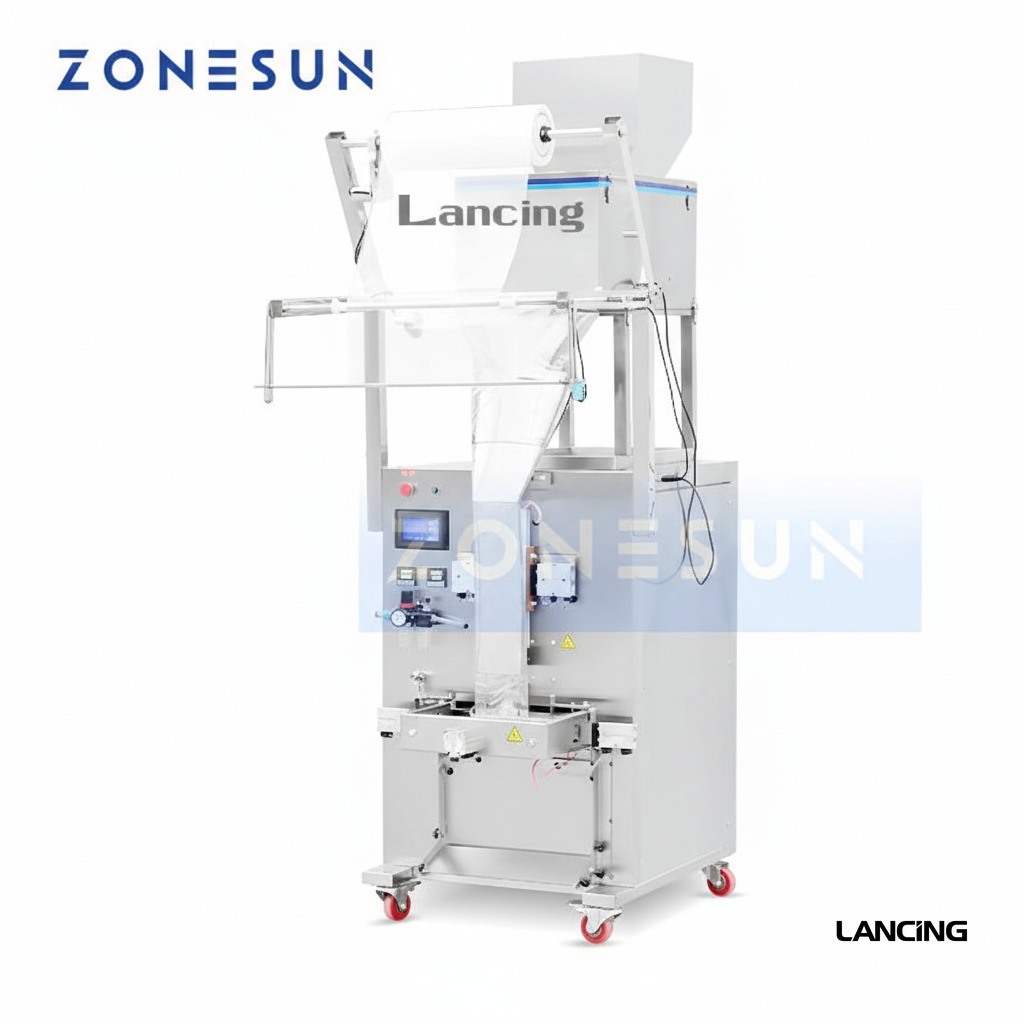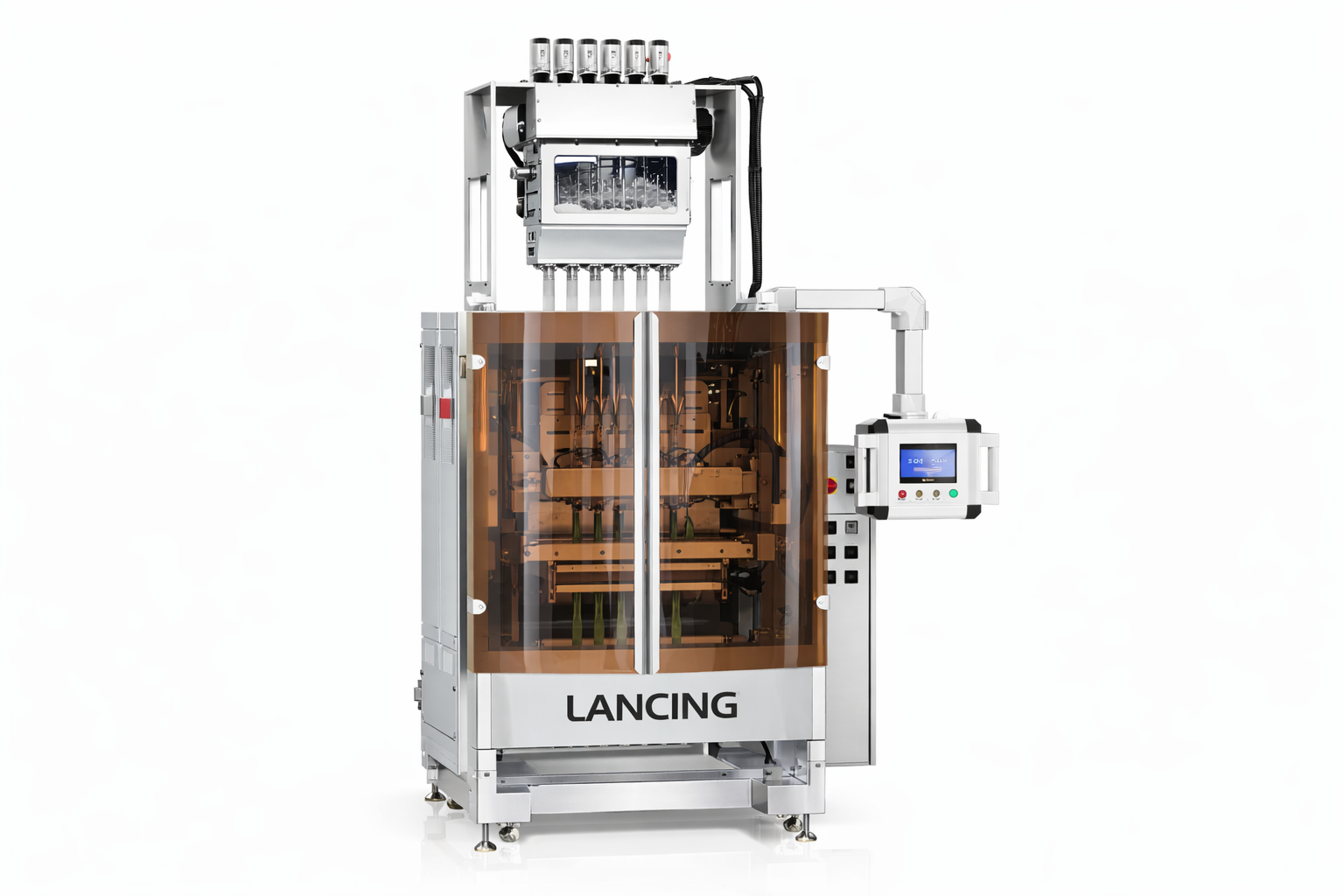
Powder VFFS

LU-FSFM6 Multi-Lane VFFS Powder Bagger

High-speed multi-lane vertical form fill seal machinery for powder sachets, stick packs and small bag formats, with independent auger dosing across multiple lanes.

LU-FSFM6 Multi-Lane VFFS Powder Bagger

Machine overview

High-speed multi-lane vertical form fill seal machinery for powder sachets, stick packs and small bag formats, with independent auger dosing across multiple lanes.

This route is specified around your product behaviour, film material, required pack dimensions, expected output, available utilities and downstream handling. Final specification is confirmed against the live application.

Typical applications

  • Powders
  • Detergent powder
  • Seasoning
  • Nutraceutical powder
  • Small sachets

Specification guide

ModelLU-FSFM6
Filling methodAuger filling
VoltageAC220V/380V 50–60Hz
PowerAbout 5.5kW
SpeedAbout 20–40 pcs/min per lane
Finished bag size(L)50–180mm × (W)20–95mm
Max film width600mm
Machine sizeAbout 1685 × 1300 × 2005mm

Project notes

Confirm product samples, bag drawings, filling range, dosing tolerance, seal pattern, film roll details and any print, inspection or reject requirements before ordering.

Powder VFFS specification notes

This multi-lane powder route is most relevant where sachet or stick-pack output matters and each lane needs stable auger dosing. Check powder bulk density, dust level, target fill weight, sachet size, film structure and whether any dust extraction or anti-static control is needed.

For a wider comparison, see the related specification guide or send a product sample, bag size and target output to Lancing.
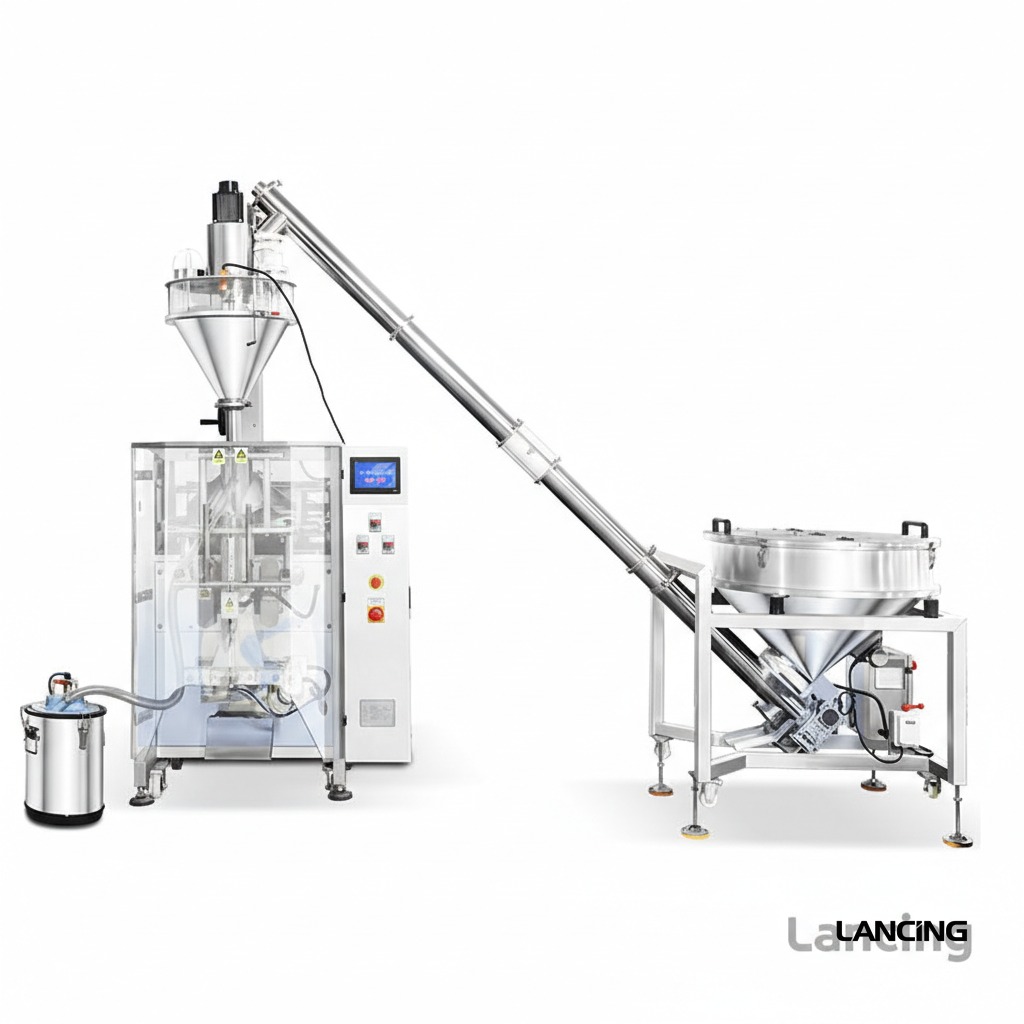
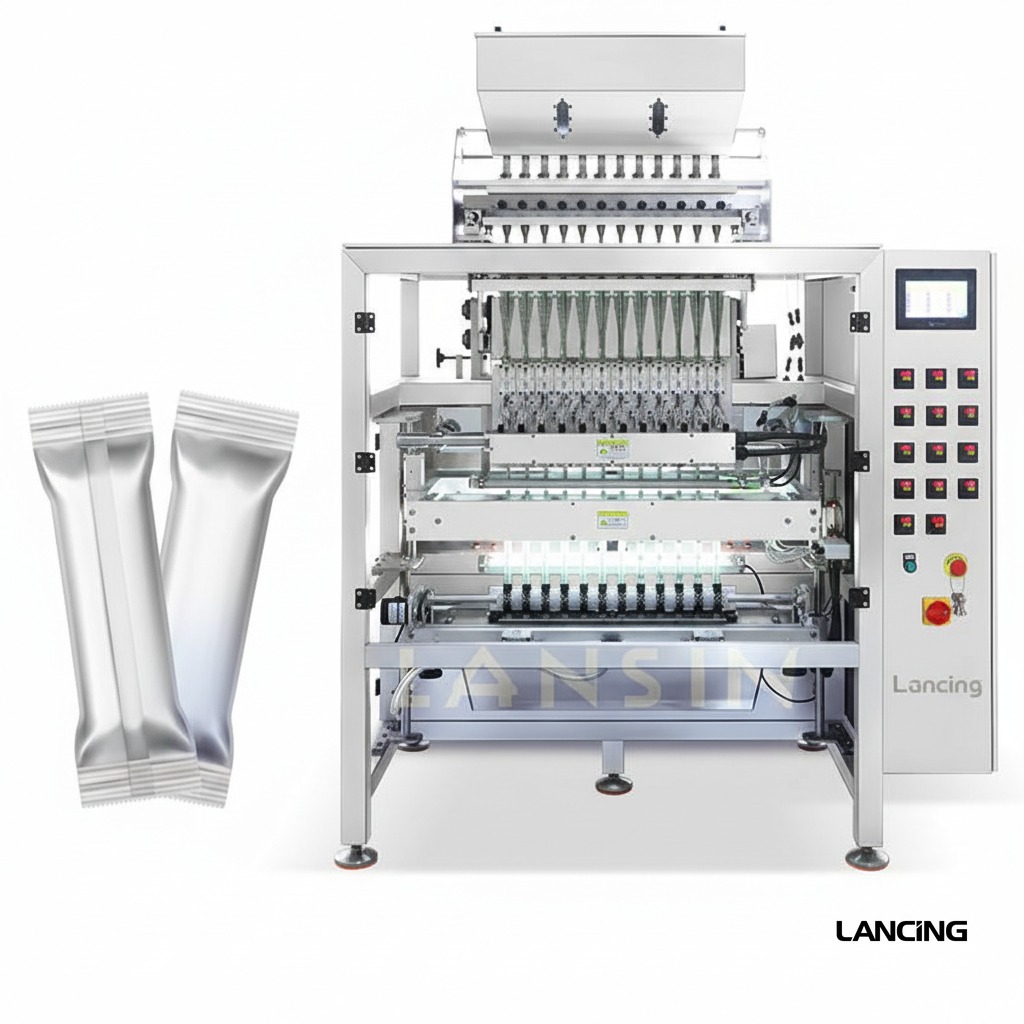
Multi-lane powder specification

Application engineering for the LU-FSFM6 multi-lane powder bagger

Where this configuration is strongest

The LU-FSFM6 is a multi-lane auger VFFS route for small powder sachets, stick packs and narrow bags where parallel dosing is required. It is most relevant when the product can be distributed consistently to each auger and the film design supports the selected lane pitch and cut arrangement.

How the published specification should be interpreted

The page lists bag dimensions of L50–180mm × W20–95mm, a maximum film width of 600mm and about 20–40 pieces per minute per lane. These figures define a shortlist, not an unconditional total output. Powder flow, dose volume, lane balance, film repeat, seal time and the accepted inspection plan determine the achieved result.

Lane balance, powder feed and seals

Each lane needs a stable product supply and repeatable auger response. The trial should record dose by lane, hopper refill behaviour and any tendency for powder to aerate or bridge. Inspect the horizontal seals for dust contamination and compare all lanes after a stop and restart, not only during a continuous run.

Changeover and operator access

Confirm how augers, hoppers, forming parts, film rolls and sealing components are accessed. Product-contact parts and the cleaning method should be agreed for the intended powder range. A lane-specific fault must be identifiable without losing traceability of the other lanes.

Integration and acceptance inputs

Provide the product sample, target dose and tolerance, sachet drawing, production-intent printed or unprinted film, lane artwork, coding requirement, voltage, available air and discharge arrangement. Acceptance should sample every lane for dose, registration, seal, cut and code.

When another route may be better

For larger single bags or a broad powder fill range, compare the LU-FS06 auger VFFS machine. Where the project is mainly standalone powder dosing rather than bag forming, use powderfillers.co.uk or the specialist auger guidance at augerfillers.co.uk.

Buyer questions

LU-FSFM6 multi-lane powder bagger FAQs

Is published per-lane speed the same as guaranteed total output?

No. Total accepted output depends on lane count in use, powder feed, dose time, registration, seal and cut performance and the agreed pack checks.

What powder data is needed?

Provide representative bulk density, flow and dust behaviour, target dose, tolerance, sample quantity and any cleaning or allergen-control requirement.

How should printed multi-lane film be supplied?

Provide production-intent roll stock with confirmed lane pitch, repeat length, registration mark, winding direction and artwork position.

How is lane consistency checked?

Identify samples from every lane and compare dose, bag dimensions, registration, seals and cut position across the run.

What can cause one lane to drift?

Product distribution, hopper level, auger condition, individual settings, film geometry or local sealing/cutting issues can create a lane-specific difference.

What should be checked after a roll change?

Confirm web alignment, lane registration, first-pack dose, seal and cut before returning all lanes to normal collection.

Application review

Confirm the published specification with your product and film.

Contact Lancing

LU-FSFM6 trial plan

Validate a multi-lane powder bagger lane by lane

Use the published envelope to prepare the trial reel

The LU-FSFM6 listing identifies finished bags from 20–95 mm wide and 50–180 mm long, a maximum film width of 600 mm and about 20–40 pieces per minute per lane. These values support an initial shortlist, but the production reel still needs the correct lane pitch, repeat length, seal areas, registration marks, winding direction and artwork position for the proposed forming and cutting arrangement.

Label samples by lane and test phase

Do not mix all finished sachets into one sample. Mark the lane, time and phase so dose, bag dimensions, registration, vertical and horizontal seals and cut position can be compared across the web. This makes it possible to distinguish a product-distribution issue from a local auger, forming, sealing or cutting condition.

Check cross-web product and film balance

Parallel augers require a consistent product supply, while the shared film web must track and seal across its full width. Review hopper level, product distribution, lane settings, web alignment and jaw condition together. An acceptable average can hide one lane that is outside the agreed dose or presentation standard.

Include restart and roll-change recovery

After a controlled stop or reel change, verify the first accepted dose, lane registration, cross-web cut and seals before returning packs to normal collection. Record the number and cause of rejected packs. The accepted operating point should be based on repeatable lane-by-lane quality with the actual powder and film, not the sum of nominal lane rates.

Sampling evidence

A practical multi-lane sample grid

Test phaseWhat to labelWhat the evidence should show
Initial start-upFirst packs from every lane and the reason for each reject.Controlled recovery of dosing, registration, sealing and cutting.
Stable runTimed sets from every lane.Lane-to-lane dose and pack consistency under the agreed conditions.
Product refillSamples before and after the hopper-level change.Whether product distribution or aeration changes the dose.
Stop and restartLast accepted set before the stop and the first accepted set after restart.Repeatable recovery without one lane drifting.
Roll changeFirst registered, sealed and correctly cut set across the web.Reel alignment, lane pitch and artwork position restored together.

Multi-lane questions

Additional LU-FSFM6 acceptance questions

Why is an overall average insufficient?

An overall mean can conceal one lane with a dose, registration, seal or cut problem. Retain labelled results from every lane.

Does 600 mm film width define the final sachet layout?

No. It is the published maximum film width. Lane pitch, margins, seals, forming geometry and artwork determine the usable layout.

How should total output be stated?

State accepted sachets per minute under the agreed powder, dose, film and inspection conditions, with lane count and reject rules recorded.

Add lane inspection, dust assessment and accepted-count data to the trial

A multi-lane trial should identify dose, seal and cut results by lane rather than combining all packs into one average. Where the powder can create airborne dust, complete the material and process assessment before extraction, electrical equipment or cleaning methods are fixed. If inspection or production reporting is required, define whether counts are per lane, gross packs, rejected packs or accepted packs.

Call now