Product behaviour
- cocoa powder and fine food powders
- auger filling
- Sample material for testing and feed checks
Product application guide
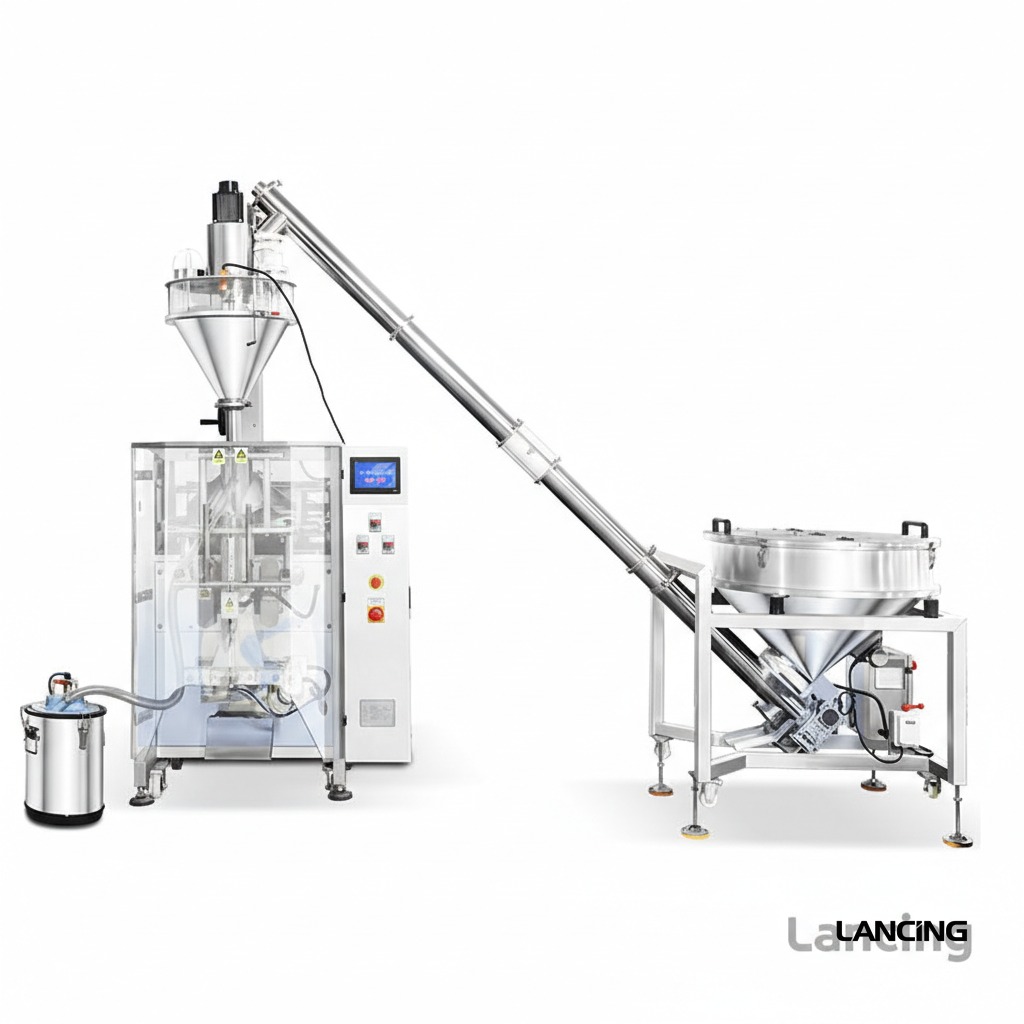
Cocoa powder packing machine guide for auger filling, dust control, film sealing and small bag or sachet production.
Buyer intent
Cocoa powder packing machine guide is aimed at UK buyers comparing auger-fed VFFS or sachet packing for cocoa powder and fine food powders. The best specification is not chosen from the machine name alone; it is built around the product, the target pack, the film and the output rate that needs to be achieved reliably in normal production.
For cocoa powder, the important checks are dust at the seal area, powder settling after filling and cleaning between flavours. These factors affect the recommended dosing route, seal design, machine speed, floor layout and the amount of operator intervention required during changeover.
Cocoa powder and fine food powders can vary in flow from batch to batch, so the feed system should be tested against real samples rather than assumed from the product name. Products that bridge, dust, string, clump or settle slowly may need different hopper geometry, agitators, dosing screws, pump settings or discharge controls.
The pack format for this application is usually sachets, pillow bags and small pouches. Film choice, seal width, batch coding and final pack handling should be confirmed before the machinery specification is frozen.
Before requesting a quotation, prepare the fill weight or volume, sample product, finished pack size, preferred film or pouch material, voltage, available air supply and target packs per minute. If the project needs conveyors, printers, checkweighers, metal detection or collection tables, those items should be included at the same time so the line is planned as a complete system.
Specification checks
Machinery route
Use this page as a starting point for narrowing the specification before asking for a formal quotation. Similar products can still need different machinery settings if the bulk density, particle size, viscosity, film or finished pack changes.
Buyer questions
Useful details include the product sample or description, fill weight, target pack size, film type, required output, power and air availability, and whether coding, weighing, conveyors or inspection are required.
The filling route depends on product behaviour. For this topic, the likely options to compare are auger filling, but the final choice should be confirmed using product samples and the target tolerance.
Cost and lead time are influenced by the dosing system, pack format, sealing method, control options, lane count, conveyors, inspection equipment and the level of installation or training required.
Need advice?
Product evidence
Cocoa powders and blends can vary by recipe and condition. The product supplied for testing should represent normal production variation rather than an unusually free-flowing sample.
| Property | Why it matters | Practical evidence |
|---|---|---|
| Bulk density and aeration | Changes the mass delivered by a volumetric auger movement | Measure representative loose and settled condition used in production |
| Cohesion and bridging | Can interrupt hopper feed or create irregular auger fill | Observe refill, hopper level and dose trend through a defined run |
| Fines and dust | Can contaminate seals, sensors and working areas | Inspect seal zone, extraction path and retained packs |
| Moisture and temperature | Can change flow, sticking and compaction | Record sample condition and expected production environment |
| Target dose and bag headspace | Affects screw selection, fall time and seal clearance | Provide finished-pack drawing and accepted fill level |
| Film and sealant layer | Determines tracking and the available seal window | Trial production-intent film with printed repeat where applicable |
Cohesive powder guidance
Auger dosing relies on repeatable product fill around the screw. Hopper agitation should support flow without excessive compaction or aeration. Record dose results through refill events because a short demonstration at one hopper level can miss the production variation.
Cocoa dust can travel with displaced air and settle on the seal surfaces. Review fill-tube design, timing, bag length, extraction and static. Inspect seals under the agreed test method rather than relying only on appearance.
Supply the full laminate, thickness, roll width, repeat, registration mark and winding direction. If the pack uses a barrier construction, that requirement should be defined by the product owner and tested in the intended packaging process.
Confirm access to auger, hopper, forming tube and sealing area, and define how residual powder is contained and recovered. Allergen and hygiene procedures remain the responsibility of the user’s validated production system.
This guide covers cocoa powder within roll-fed form fill seal machinery. Broader powder filler selection belongs on powderfillers.co.uk, while auger-specific selection belongs on augerfillers.co.uk.
Application review