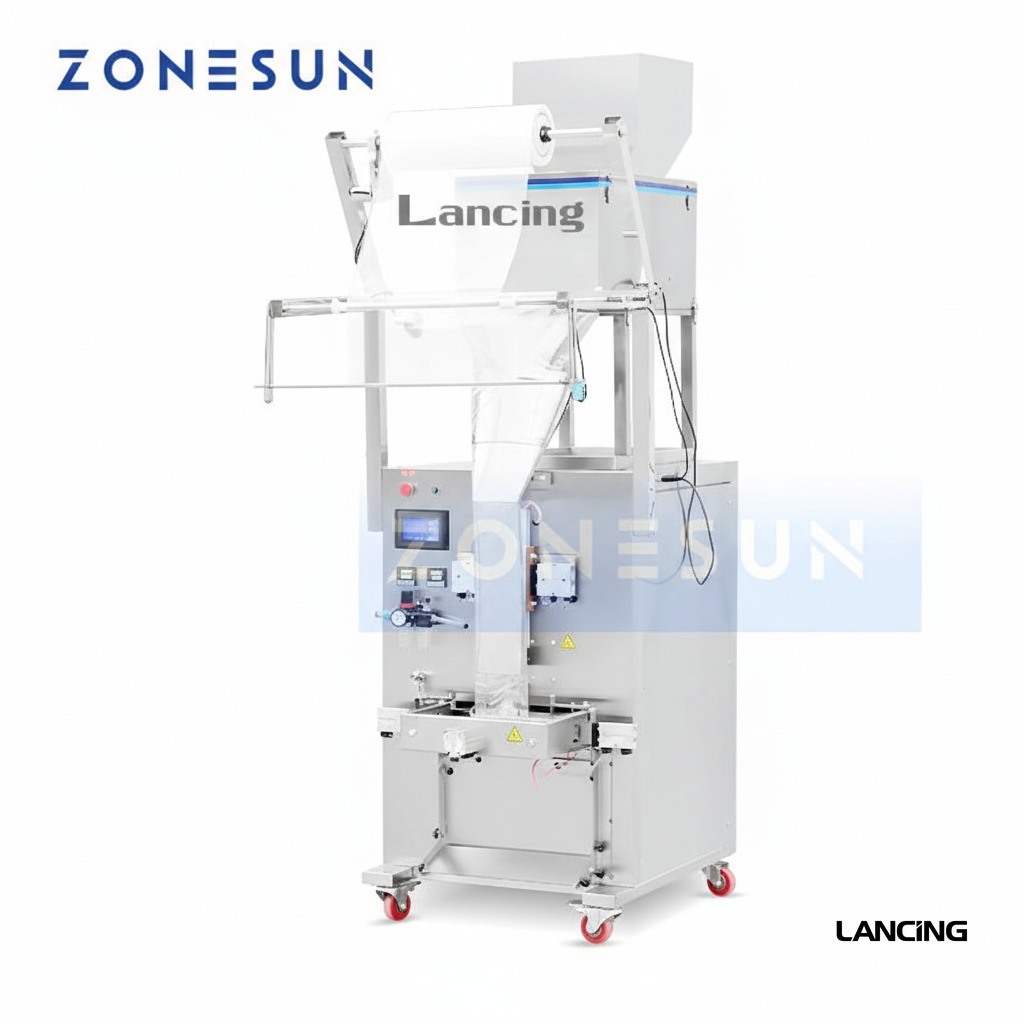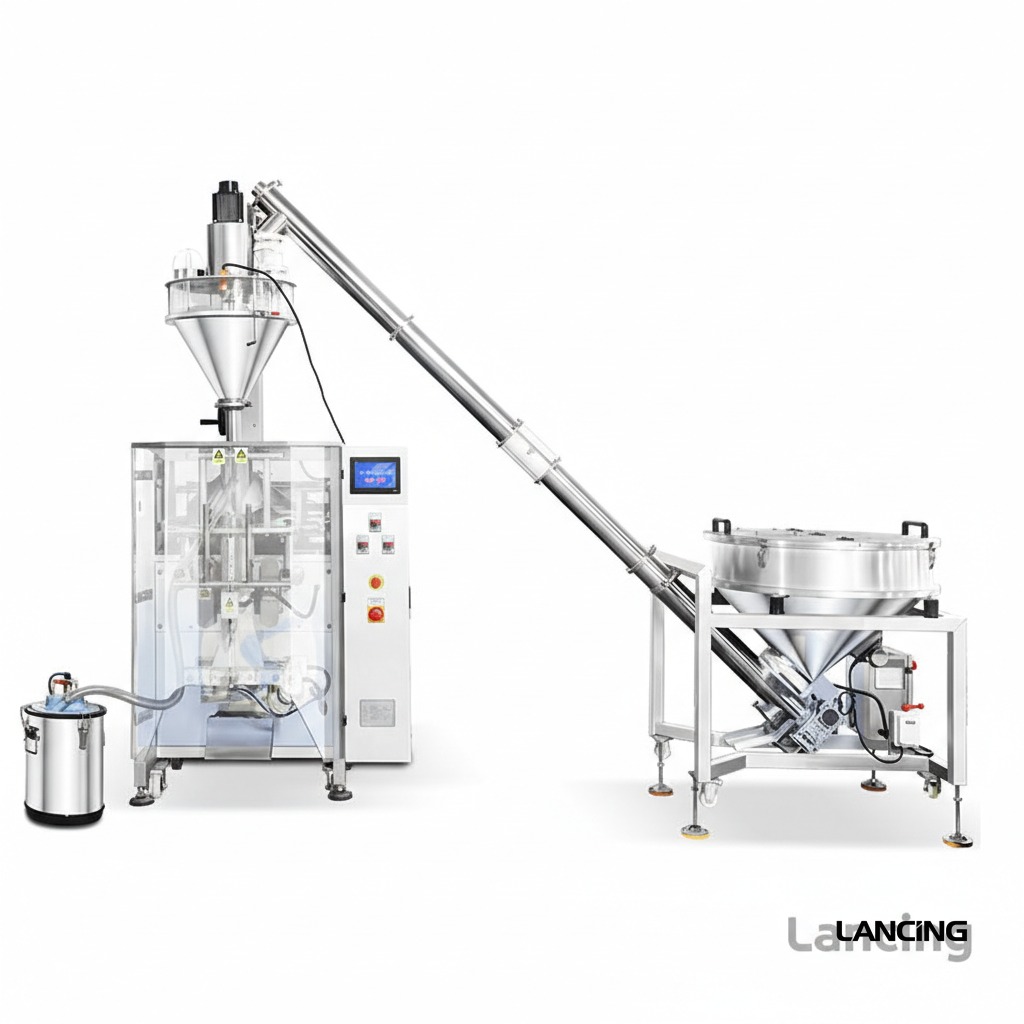
Auger powder bagging

Automatic VFFS Auger Powder Filling Machine

Fully automatic auger filling and form fill seal machine for free-flowing and controlled-flow powders, using screw dosing and film forming for finished bags.

Automatic VFFS Auger Powder Filling Machine

Machine overview

Fully automatic auger filling and form fill seal machine for free-flowing and controlled-flow powders, using screw dosing and film forming for finished bags.

This route is specified around your product behaviour, film material, required pack dimensions, expected output, available utilities and downstream handling. Final specification is confirmed against the live application.

Typical applications

  • Cleaning powder
  • Powder products
  • Food powders
  • Laundry products

Specification guide

ModelLU-FS06
Working voltage110/220V 50–60Hz
Packaging speed5–80 bags/minute
Filling range150–2000ml
Max film width520mm
Bag making sizeW: 60–250mm / L: 80–350mm
Air pressure0.6–0.8MPa
Machine weight500kg

Project notes

Confirm product samples, bag drawings, filling range, dosing tolerance, seal pattern, film roll details and any print, inspection or reject requirements before ordering.

Auger powder filling specification notes

This auger VFFS route is suited to many free-flowing and controlled-flow powders. The auger screw, hopper agitation, filling height and bag sealing should be reviewed against sample product before quotation.

For a wider comparison, see the related specification guide or send a product sample, bag size and target output to Lancing.
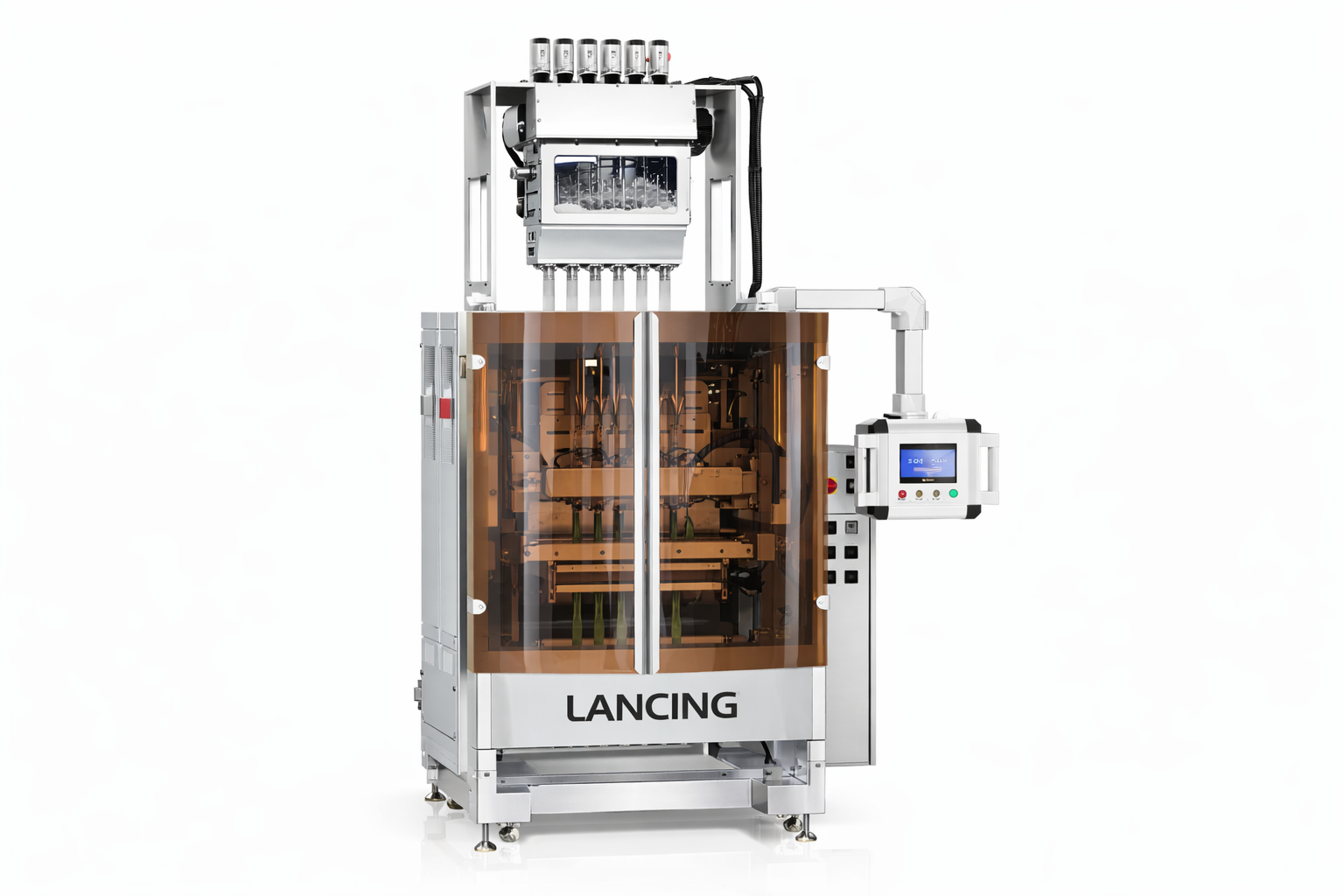
Single-lane auger VFFS specification

Application engineering for the LU-FS06 auger powder VFFS machine

Suitable powder and pack conditions

The LU-FS06 combines auger dosing with roll-fed vertical bag forming. It is a practical route for powders that can be metered by screw displacement, provided hopper flow, bulk density and product fall are stable enough for the required dose and seal condition.

Interpret volume and mass carefully

The published filling range is 150–2000ml, while powder projects are often specified by weight. The equivalent mass depends on bulk density and the way the product settles in the auger. Use representative density data for the initial calculation and confirm weight repeatability by trial.

Published speed and bag range

The page lists 5–80 bags per minute, a maximum film width of 520mm and bag sizes W60–250mm × L80–350mm. The achievable accepted speed depends on the dose, screw size, product fall time, bag length, film, seal dwell and connected equipment. The listed 0.6–0.8MPa air requirement should be checked against site capacity and consumption for the final configuration.

Powder control and cleaning

Hopper agitation and refill should maintain feed without over-compacting or aerating the powder. Inspect dust paths around the forming tube and seal jaws. Define access to the screw, hopper, contact parts and extraction points so the intended clean-down procedure is achievable.

Line integration and trial evidence

Confirm product-feed height, level control, coding, discharge conveyor, checkweighing and reject logic. During the trial, record screw and agitation settings, dose results, film settings, seal checks, restarts and waste generated before stable accepted packs are recovered.

When to compare another technology

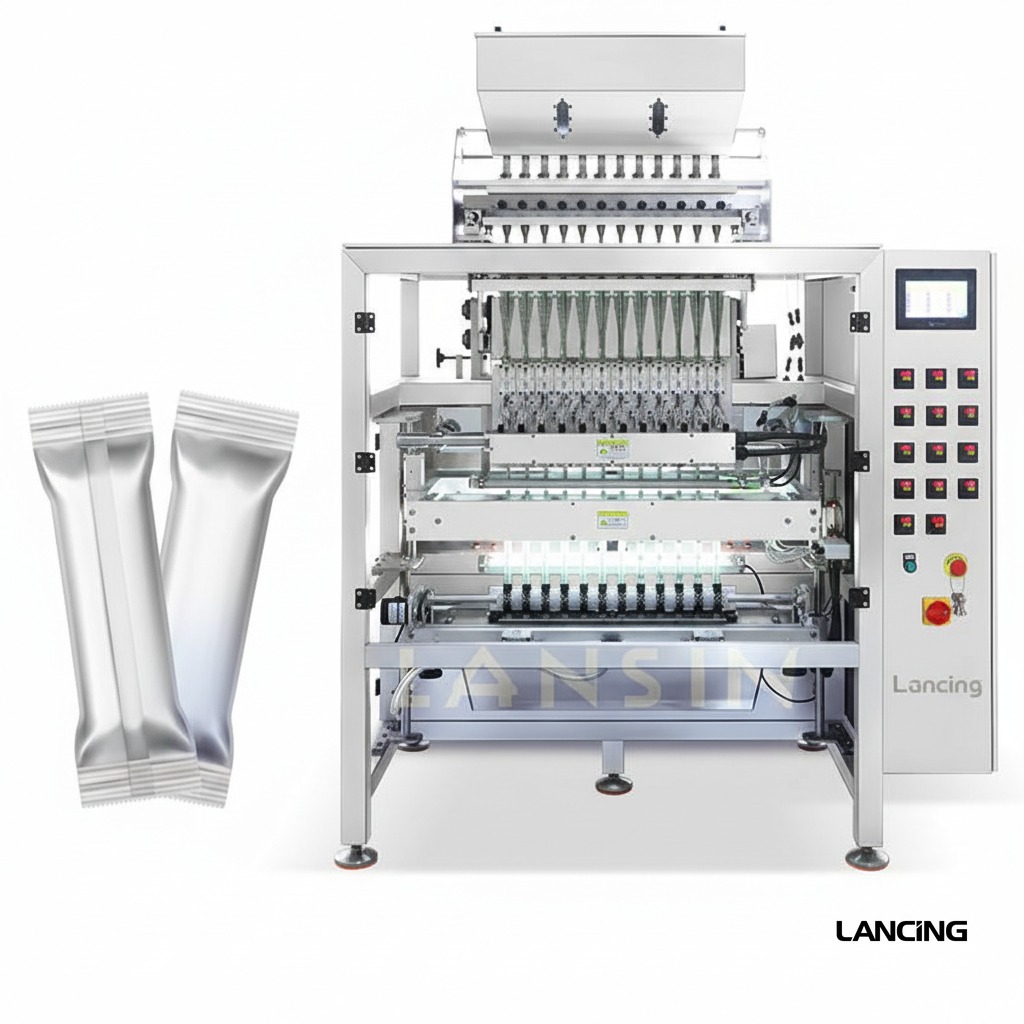
Very small high-volume sachets may favour a multi-lane route such as the LU-FSFM6. A project centred on standalone auger filling rather than roll-fed bags should use the specialist information at augerfillers.co.uk.

Buyer questions

LU-FS06 auger powder VFFS machine FAQs

Can the 150–2000ml range be read as grams?

No. Convert volume to an estimated mass using representative bulk density, then confirm the target weight and tolerance with the actual powder.

What affects auger dose repeatability?

Bulk density, aeration, hopper level, screw geometry, agitation, refill method, product moisture and the selected dose can all affect the result.

Why can output be below the published maximum?

The powder dose, bag length, product clearance, film, seal dwell, coding and downstream handling may require a slower accepted operating point.

What film information is required?

Provide construction, thickness, roll width, winding direction, printed repeat and registration mark, plus the required finished bag dimensions.

How should compressed air be checked?

Confirm pressure at the machine under operating demand, air quality and available flow rather than relying only on a static supply reading.

What is checked after product changeover?

Verify correct clean-down, reassembly, recipe and auger selection, then inspect the first accepted doses and seals before normal collection.

Application review

Confirm the published specification with your product and film.

Contact Lancing

LU-FS06 dosing evidence

Translate the target fill weight into a repeatable auger and bag trial

Convert mass to an estimated volume before choosing tooling

The LU-FS06 publishes a 150–2000 ml filling range. For a project sold by weight, estimate the required volume using representative bulk-density data and allow for normal variation between loose, aerated and settled product states. This calculation creates a starting point only; final auger tooling and settings must be confirmed by weighing actual fills.

Control the powder condition presented to the auger

Hopper level, refill method, agitation, vibration, compaction and moisture can alter how much mass occupies each auger displacement. Record these conditions during the trial. A setting established with a hand-filled hopper may not remain valid when an automatic screw or vacuum feed changes aeration or head pressure.

Match dose time to the available seal-clearance window

The page lists 5–80 bags per minute, bags from 60–250 mm wide by 80–350 mm long and a maximum film width of 520 mm. The accepted rate depends on the real dose, screw movement, product fall and settling before the horizontal jaws close. Dust or residual powder in the seal area must be treated as a dosing and timing issue as well as a sealing issue.

Verify site air and product-feed conditions

The published air-pressure range is 0.6–0.8 MPa. Confirm pressure under operating demand, available flow and air quality for the final machine arrangement. Also define feed height, hopper replenishment, extraction, coding and discharge equipment so the trial represents the line that will be installed.

Trial inputs

Information that links auger dosing to the finished VFFS bag

InputWhy it mattersEvidence to record
Bulk-density rangeLinks the published volume range to the required mass.Product condition, sample method and calculated starting volume.
Powder flow and dustAffects hopper feed, agitation, auger consistency and seal cleanliness.Bridging, compaction, aeration, dust path and refill behaviour.
Target weight and toleranceDefines the dose acceptance method.Individual weights, sample frequency, mean and agreed reject rule.
Bag and filmDefines available headspace, product fall and sealing window.Bag drawing, film construction, roll width, repeat and seal areas.
Production patternTests whether the setting survives normal use.Start-up, stable run, refill, stop/restart, roll change and clean-down recovery.

Auger trial questions

Additional LU-FS06 specification questions

Which bulk density should be used for the first calculation?

Use data from representative production material and record its condition. Where density varies, use the range to check that the expected volume remains practical.

Can a weight target be accepted from the millilitre range alone?

No. The published range is volumetric. The target mass and tolerance must be demonstrated with the actual powder, auger configuration and hopper conditions.

When is a standalone auger filler the better owner?

Where the project is primarily about dosing into existing jars, bottles, tubs or pre-made packs rather than forming a bag from reel film, use Auger Fillers UK.

Treat auger dosing, dust control and the bagger cycle as one system

Bulk density, aeration and hopper refill can change the mass delivered by a volumetric screw rotation. The trial should therefore include stable running, refill, stop and restart, while checking powder on the seal area and extraction influence. If the product may create a combustible dust, the site-specific DSEAR assessment and hazardous-area requirements must be agreed before the equipment specification is closed.

Call now